














Strand Three
This is the most experimental strand of ASKe’s work and is based on a theoretical model designed by the ASKe team. The ASKe Matrix outlines how students develop understandings of assessment standards through a nested heirarchy of approaches. ASKe argues that in order to enhance students’ learning and performance, and to assure more consistent standards among staff, a greater shared understanding of assessment standards is needed. It is core to this philosophy therefore that we cultivate a community of practice at the Business School that encompasses both students and staff.
Further to this ASKe argues that a ‘true’ community of practice will only emerge from a combination of physical and social spheres and so has sought to not only create the physical space to accommodate this but also develop the social environment needed to colonise this space.
To this end ASKe used their £2 million capital investment from HEFCE to build a brand new social learning space for Business School undergraduates - the Simon Williams Undergraduate Centre (SWUC) - providing a physical environment to support student learning outside structured class time, in which students and staff can meet and develop a shared understanding of academic standards.
This space is equipped with state-of-the-art IT and AV equipment and houses a café and other flexible spaces in which students and staff can study and work in groups, contributing to the development of community on campus.
Beyond the provision of SWUC, ASKe created several social initiatives designed to foster community at the Business School:
- The Module Assistant scheme;
- the Casual Technical Advisor (CTA) scheme;
- the Peer Assisted Learning (PAL) scheme;
- the ‘Planning a Successful Event’ module; and
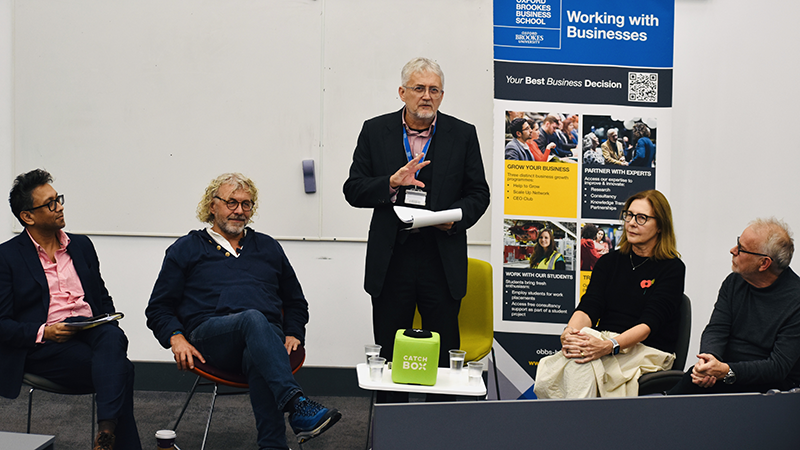
- a programme of eventsfor both students and staff throughout the academic year.