

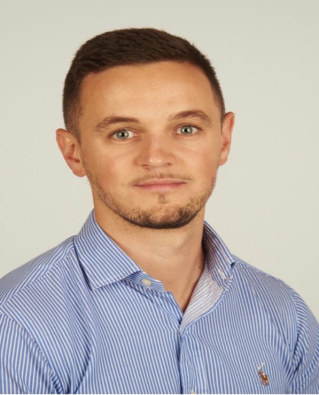
Ben Wright
Lecturer in Exercise Physiology
School of Sport, Nutrition and Allied Health Professions
Role
Ben is a Lecturer in Exercise Physiology, leading and teaching across a range of modules within the Sport and Exercise Science; Sport, Physical Activity and Health Promotion; and Sport, Coaching and Physical Education undergraduate degree programmes.
His teaching covers sport and exercise physiology, anatomy, fitness testing and assessment, laboratory techniques, clinical populations, and rehabilitation. He also supervises undergraduate and postgraduate dissertations.
Alongside his teaching responsibilities, Ben contributes to the delivery of vocational qualifications accredited by the Chartered Institute for the Management of Sport and Physical Activity (CIMSPA).
His teaching covers sport and exercise physiology, anatomy, fitness testing and assessment, laboratory techniques, clinical populations, and rehabilitation. He also supervises undergraduate and postgraduate dissertations.
Alongside his teaching responsibilities, Ben contributes to the delivery of vocational qualifications accredited by the Chartered Institute for the Management of Sport and Physical Activity (CIMSPA).
Teaching and supervision
Modules taught
- NUTR7008: Research Project
- NUTR7013: Foundations of Nutrition and Exercise Physiology
- SPOR4010: Anatomy for Sport and Exercise
- SPOR4006: Physiology for Human Movement
- SPOR4012: Fitness and Assessment
- SPOR5004: Principles of Training for Sport and Exercise
- SPOR5007: Independent Study 1
- SPOR5008: Laboratory Techniques in Sport and Exercise
- SPOR5009: Physical Activity & Health
- SPOR5012: Applied Sport and Exercise Physiology
- SPOR6004: Clinical Populations and Rehabilitation
- SPOR6006: Independent Study 2
- SPOR6008: Project \ Dissertation
Supervision
Examining the ergogenic effects of low dose caffeinated chewing gum on perceptual responses and physiological measures of anaerobic performance
The Effect of Acute Beetroot/Nitrate Supplementation on Physiological Responses/markers at LT1 and LT2 in Elite University Rowers: A Randomised Double-Blind Crossover Study.
The Effect of Acute Beetroot/Nitrate Supplementation on Physiological Responses/markers at LT1 and LT2 in Elite University Rowers: A Randomised Double-Blind Crossover Study.
Research
Ben’s research focuses on exercise physiology and cardiovascular health, with particular emphasis on exercise as a non-pharmacological strategy for managing high blood pressure. His work includes the development and evaluation of novel isometric exercise approaches, as well as investigating the physiological adaptations and mechanisms underpinning reductions in blood pressure following isometric resistance training.
His previous research has examined the effects of eccentric exercise on physical function in older adults and explored associations between training-load measures, fitness, and performance characteristics in soccer players.
His previous research has examined the effects of eccentric exercise on physical function in older adults and explored associations between training-load measures, fitness, and performance characteristics in soccer players.
Publications
Professional information
Memberships of professional bodies
European College of Sport Science Member
Conferences
28th Annual Congress of the European College of Sport Science (ECSS) - Palais des Congrès, Paris, France
12th conference HEPA Europe - Leuven, Belgium
30th Annual Congress of the European College of Sport Science (ECSS) - Palacongressi di Rimini, Rimini, Italy
12th conference HEPA Europe - Leuven, Belgium
30th Annual Congress of the European College of Sport Science (ECSS) - Palacongressi di Rimini, Rimini, Italy
Consultancy
Sport and Exercise Science Consultancy - https://www.brookes.ac.uk/sport-and-exercise-consultancy