

Madagascar’s Climate Exodus
How poverty and drought are driving deforestation in one of the world’s richest biodiversity hotspots.
A new study has revealed how climate-induced migration, poverty, and illegal agriculture are fueling an alarming surge in deforestation within a protected area of western Madagascar - posing a severe threat to both biodiversity and the wellbeing of vulnerable communities.
Published in Environmental Development, the research - led by an international team headed by Dr Herizo Andrianandrasana from the University of Warwick, including Dr Marco Campera and Dr Peter Long from Oxford Brookes University - examines the intricate link between environmental degradation and human displacement. Using field interviews, satellite images, and socioeconomic data across five communes in and around the Menabe Antimena protected area, the study offers stark evidence: climate breakdown is not only uprooting lives but also accelerating forest loss.
Between 2017 and 2022, forest cover within Menabe Antimena declined by over 22%, with losses outside the protected boundaries rising to more than 36%. Much of this damage was tied to an influx of internal migrants fleeing worsening drought and poverty in Madagascar’s arid south - regions hit by “kere,” a term locals use to describe conditions of famine. The study found that 89% of migrants moved due to climate-related crop failures.
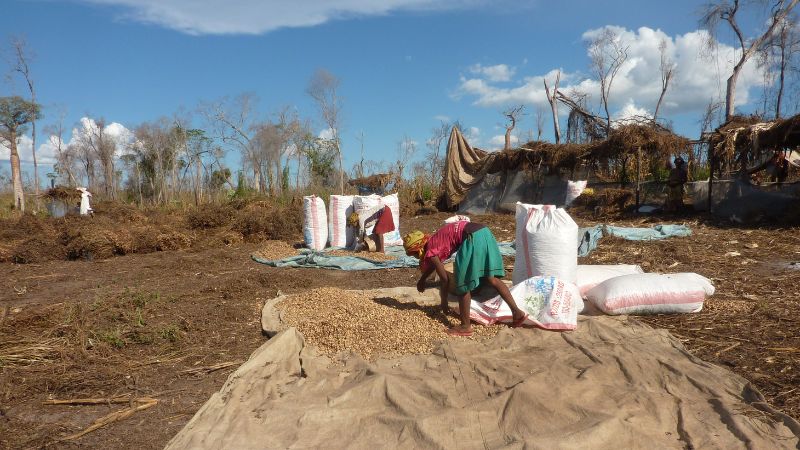
Once in Menabe, migrants - driven by necessity - frequently turned to slash-and-burn farming in order to survive, growing maize and peanuts on illegally cleared land, sometimes inside the strict protected zones. This not only threatened endangered species like the giant jumping rat, the flat-tailed tortoise or Madame Berthe’s mouse lemur, but also disrupted decades of conservation efforts.
Amplified by the increase in local and global demand, social inequality and incentives to corruption, the maize and peanut businesses thrive and motivate those who benefit from the system requiring more effective control of strict conservation zones in the protected area, transport of goods, and of warehouses. .This is a classic vicious cycle,” the authors write. “Environmental stress drives migration, which in turn increases pressure on forests, deepening ecological degradation.”
Satellite data shows a corresponding rise in fire activity - used to clear forest for cultivation - with a 55.9% increase in fire density outside protected areas and a 24.7% rise within. The relationship between rising migrant populations and fire frequency was particularly pronounced in zones where forest cover was greatest, suggesting new arrivals seek fertile, forested land.
Yet the study is careful not to cast migrants as villains. Instead, it argues that migration is a rational survival strategy in the face of systemic failure: climate shocks, poor governance, and lack of economic opportunity. Many migrants expressed satisfaction with their improved conditions—despite living in makeshift camps and working under informal, and often exploitative, arrangements.
The findings come at a critical moment for Madagascar, where political instability and poverty often undermine conservation. “Government-led, evidence-based strategies are urgently needed,” the study concludes, urging stronger collaboration between agricultural and environmental ministries to provide sustainable alternatives for rural populations.
As the world grapples with the human fallout of climate change, Madagascar’s story is a microcosm of what’s to come. It shows how environmental justice and social justice are inseparably intertwined - and how failing to address one threatens the future of both.
The full study, Links between poverty, climate-induced migration and deforestation in western Madagascar, is available in Environmental Development, Volume 56 (2025),