

Expert comment: The psychology and power of horror
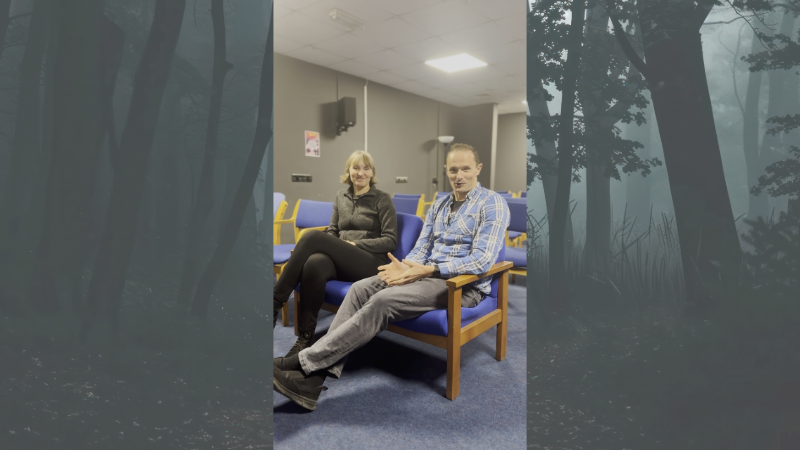
Why do we choose to be scared? From haunted houses to horror films, humans have long sought out fear for fun — but is it just entertainment, or something deeper? We asked Dr Valerie van Mulukom, Senior Lecturer in Psychology, and Dr Pete Turner, Senior Lecturer in Film and Digital Media at Oxford Brookes, to explain why we love to be terrified.
1. Why do people engage with horror?
Pete: For the past five years, I’ve been researching the memories of people who grew up in the 1980s and secretly watched horror films that the British Board of Film Classification said were unsuitable for children. What I found was that young viewers had plenty of reasons for seeking out these so-called “video nasties.”
Many recalled that the appeal of horror outweighed the fear. Getting hold of films on VHS, often through friends or older siblings, was part of the excitement. While some simply enjoyed the scares, others were captivated by the craft behind the chaos, especially the practical effects and makeup that brought monsters and gore to life. Despite their age, they also recognised the emotional depth and psychological power of horror, remembering that the films’ unsettling atmosphere could stay with them just as vividly as the blood and the shocks.
Valerie: New research by Danish scholar Mathias Clasen and I suggests that engaging with fiction, including horror, serves an important purpose beyond simple entertainment. The study identifies four key functions of fiction: helping us plan for the future, regulate emotions, build social connections, and shape our identities and worldviews.
Fiction is often dismissed as a frivolous pastime. But from an evolutionary perspective, storytelling sits at the heart of what it means to be human,” we note in our research. By allowing us to simulate experiences that feel real but aren’t happening in the moment, fiction helps us prepare for life’s challenges and better understand ourselves and others.
2. How does horror help us plan for the future?
Valerie: A 2020 study run by Coltan Scrivner, a psychologist who specialises in morbid curiosity, and my collaborator Mathias Clasen, found that people who were fans of horror films and so-called “prepper” genres, such as alien-invasion, apocalyptic, disaster, and zombie movies, showed greater psychological resilience and practical preparedness during the Covid-19 pandemic.
These viewers reported feeling mentally prepared for the crisis, less shocked by unfolding events, and more capable of predicting what might happen next. Many said they had even thought about what supplies to stock up on, though, as Scrivner wryly noted, toilet paper wasn’t one of them, likely because no prepper film had ever imagined that particular shortage.
3. Can horror actually help with emotional regulation?
Valerie: This may seem counterintuitive at first, engaging with horror films to curb your anxiety and deal with your emotions, but like other types of fiction, horror allows us to imagine events in our mind, without us having to go through the actual events. This simulation means that we can engage not only with possible futures, but also with a variety of emotions. In this sense, horror can be likened to exposure therapy, where you can engage with emotions in measures that can be more or less determined beforehand, or at least controlled during exposure. You can always close the book or turn off the TV. Therefore, engaging with horror allows us to practice our emotion regulation, and process intense emotions like anxiety and fear, all from the safety of the sofa.
4. Why do people watch horror together?
Pete: Watching horror films, especially when young, can be a powerful bonding experience. Sharing scares sparks emotional connection, as kids swap stories of what frightened them most. For many 1980s children, those late-night horror sessions, sometimes encouraged by older friends or even parents, became moments of shared vulnerability and lasting camaraderie.
Valerie: Watching horror together can actually bring people closer, sharing scares creates emotional synchronicity, bonding viewers as if they’ve survived something terrifying side by side, even if it’s only on screen.
5. What does enjoying horror and other fiction we engage with say about identity?
Pete: For many kids, sneaking a peek at age-inappropriate horror marked a rite of passage into adulthood. In the 1980s, being versed in scary movies set children apart from their more “childish” peers, especially boys, who saw horror viewing as a test of bravery and a badge of masculinity. Many men say those formative frights still shape how they parent and what they let their own kids watch. For others, those nights spent watching forbidden films became the foundation for lifelong friendships, and even careers in film, academia, and criticism.
Valerie: Research on autobiographical memory shows that we constantly use storytelling to make sense of our lives. We frame our past, present, and future in narrative form to understand who we are. Horror, too, offers a powerful narrative lens, helping us process fear, chaos, and change, even when the monsters we face aren’t supernatural at all.
6. Does horror reflect society?
Pete: Absolutely! Perhaps not all, but a great deal of horror reflects the time in which it was made. Look at ‘28 Years Later’ released earlier this year featuring an island cut off from the rest of the world because it chooses to tell itself outright lies and exaggerations or blinkered stories of its former glories. It doesn't take much to read it as a Brexit allegory. Even the biggest horror hit of the year, ‘Sinners’, which is set in 1932, tells us a story that has much to say about the contemporary Black experience in America and beyond.
Valerie: During the early stages of the Covid-19 pandemic, during lockdown restrictions, the films ‘Outbreak’ and ‘Contagion’ shot to the top of most streamed films on popular streaming platforms. You could say that these are thrillers that could happen, rather than supernatural horror, but not all horror is fantastical. Lessons can be learned from fictional narratives (in literature or film alike), and when created, they emerge reflecting themes of the current zeitgeist - demonstrating once again the important role of fiction in human lives.
7. Is being scared good for us?
Pete: While many 1980s kids admitted to suffering from nightmares and some long-lasting negative effects of their horror film viewings, there was also a huge amount of discussion of their pride from overcoming fears and finding pleasure in the controlled fear of these experiences. The deep nostalgic attachment to horror films that these people mentioned outweighed the negative consequences of any viewings.
Valerie: If the scare is safely induced through fiction, and if we consider all the ways in which horror and other types of fiction can support us, such as supporting planning for the future, emotional regulation, social bonding, and forming identities and worldviews, I would say so!
- The paper ‘The evolutionary functions of imaginative-narrative simulation and how they may contribute to psychological wellbeing’ by Dr Valerie van Mulukom and Dr Mathias Clasen is currently under review at Evolutionary Behavioral Sciences. She has previously also written about the evolution of fiction in a chapter in Evolutionary Perspectives on Imaginative Culture.
- Dr Pete Turner is the author of the book Found Footage Horror Movies: A Cognitive Approach and several academic papers.