

Art-Based Migrant Inclusion Research Named EU Success Story
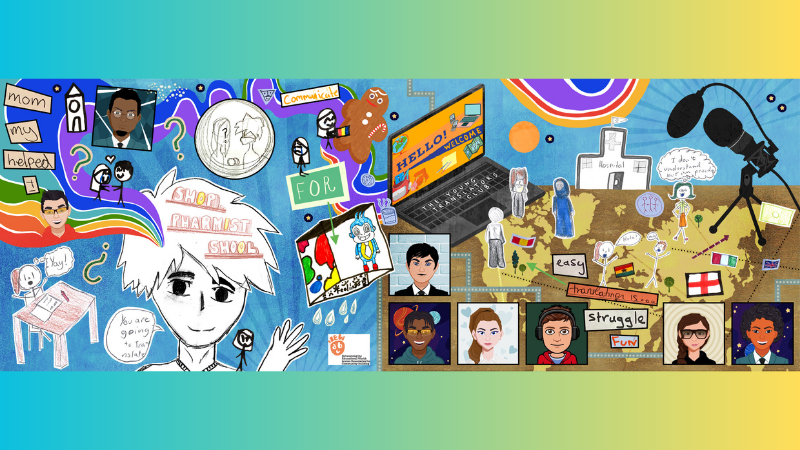
Innovative social research project earns "Success Story" distinction from the European Commission.
Oxford Brookes’ Professor Guida de Abreu and project partners from The Open University, Professor Sarah Crafter and Dr. Nelli Stavropoulou, are celebrating their EU Horizon-funded project being named a "Success Story." This prestigious European Commission distinction is reserved for projects that provide innovative, impactful solutions to major social challenges.
The Networking the Educational World: Across Boundaries for Community-building (NEW ABC) project brought together 13 partners across nine countries to develop 9 art-based pilot actions. The goal: to support the wellbeing and inclusion of children and young people from a migrant and refugee background in education.
The NEW ABC project had lived experience and inclusion at its heart. Researchers collaborated with children and young people with migratory experiences as well as teachers, families, communities, and practitioners. Using arts-based methods—like film, photography, and poetry—the team co-created resources to foster belonging in schools.
The NEW ABC project was funded by the EU’s Horizon 2020 programme and led by Professor Rachele Antonini from the University of Bologna. The UK team (including Prof. De Abreu, Prof. Crafter and Dr. Stavropoulou) was responsible for overseeing the delivery of those 9 pilot actions across the European countries, but also developed their own intervention in the UK.
Empowering Young Translators
The UK-led Empowering Young Translators intervention, engaged children and young people who speak more than one language, and who act as regular translators for peers and family.
The team worked closely with young people to design participatory activities that supported safe, expressive spaces for dialogue, storytelling, and creativity. The activities and art forms included drawing, mapping and podcast recording among others. Through these activities young participants were encouraged to explore issues of identity, belonging, and care towards others, and to share their translating experiences with new audiences through the creation of resources that support their social and emotional wellbeing. One of the resources co-produced during the project was a ‘Guide to being a young translator in school’.
The list of resources developed from the Young Translator project including guidance on how to use them in a school setting can be found on the NEW ABC website.
Future Research - ALPHABETICA project
Prof De Abreu, Prof Crafter and Dr. Stavropoulou are currently involved in another EU-funded project alongside artists and researchers Dr Kremena Dimitrova (Oxford Brookes University) and Dr Roxanne Korda (Open University).
In Prof de Abreu’s words, “It is wonderful to see how the innovative approaches to working with young people, developed through our Young Translators Club as part of the NEW ABC project, are now guiding the ALPHABETICA project.”
“Co-creation offers young people new tools to reflect on their experiences and explore new ways of engaging with their communities, while also learning how to care for themselves, each other, and the world. The stories they share and the artwork they create, offer a unique contribution to the development of innovative educational resources that promote the inclusion of all children in education.”
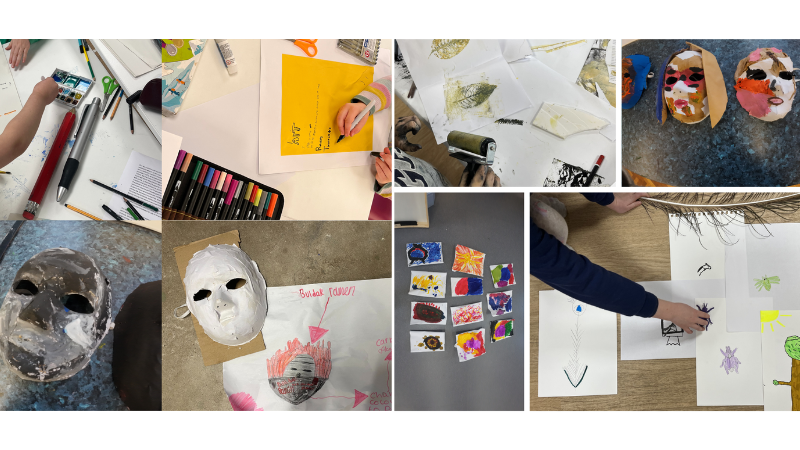
Their current project, Activating learning paths: Holistic arts-based education and training for inclusion and awareness (ALPHABETICA), is focused on enhancing the participation of children and young people facing poverty and social exclusion, in arts activities and arts-based learning opportunities. ALPHABETICA draws together some of the former NEW ABC partners alongside new collaborators to carry out 12 interventions across 8 European countries.
The UK Team has been delivering their intervention ‘Our Caring World Through Art’ (OCWA), aimed at exploring how children and young people from disadvantaged communities can engage in art in education to help them make sense of their world, their identity and their futures.
OCWA takes place in two types of learning settings: formal education settings (secondary schools in the Midlands in England) and in-community informal learning settings (local libraries in the South of England), engaging children and young people aged 3-25 years old. By inviting participants to engage with theatre and visual arts, the project will support participants’ growing sense of meaning, belonging, and connection with others, and the spaces they engage with and belong in.