

Tiny “pineapple” assassin bug reveals surprising evolutionary twist
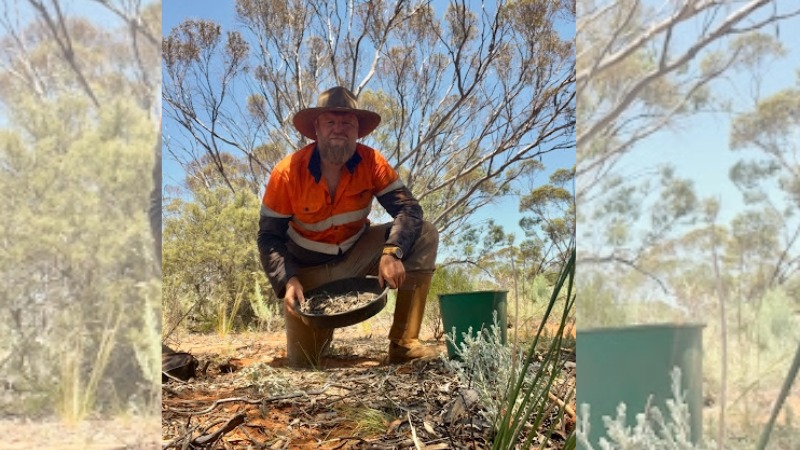
Researchers at Oxford Brookes University have discovered a new feather-legged assassin bug — a tiny predatory insect just two millimetres long — that is offering fresh insights into how these species evolve.
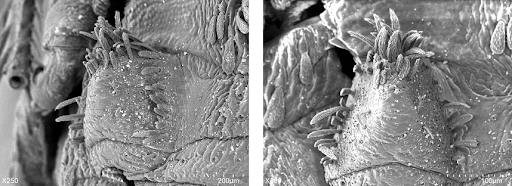
The newly described species, Aratrichous anacomosus, has been nicknamed the “pineapple assassin” because of a small gland on its body that resembles a miniature pineapple. It was found in South Australia while another was found in Pibara, Western Australia.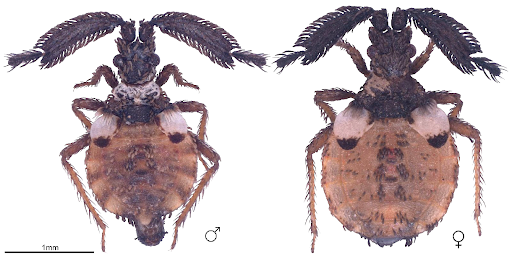
This specimen was found at the base of a tree in a dry remote river bed. Feather-legged assassin bugs are an ancient group of predatory insects known for their dramatic, feathery legs and their specialised habit of hunting ants. But this newly discovered species is very different from its relatives.
“This one really surprised us,” said Dr Matthew Bulbert, Senior Lecturer in Conservation Ecology. “It’s incredibly tiny, and it’s lost some of the features that usually define feather-legged assassin bugs.”
Most feather-legged assassin bugs are covered in bushy, feather-like hairs used in their hunting strategy. In this species, those hairs are greatly reduced — a sign of extreme miniaturisation, where animals evolve to become very small.
At the same time, the insect’s antennae have become larger and more specialised. Scientists believe these may help it interact more closely with ants, possibly even mimicking them chemically in order to live among them.
Despite its reduced size, the bug still retains a key evolutionary feature — a gland that helps attract or manipulate ants. This pineapple shaped gland had previously been thought to be absent in this branch of feather-legged assassin bugs.
Daniel Bardey, the PhD student who discovered the bug and lead author: said: “That’s what makes this species so exciting. It appears to be a transitional form that shows how features like this gland were lost and gained during the evolutionary history of these insects.”
Even more surprisingly, the species has been found in locations thousands of kilometres apart in central Australia — unusual for such tiny insects, which cannot fly and are normally expected to have very limited ranges.
Dr Bulbert added: “Understanding where these species occur is important for conservation, because animals that cannot move far are especially vulnerable if their habitats are disturbed.”
The discovery also revealed another unusual feature: both males and females have reduced wings, something not previously recorded in this group in Australia.
Feather-legged assassin bugs are among the oldest lineages of assassin bugs, with ancestors that arrived in Australia long ago and diversified into unique forms found nowhere else on Earth.
The discovery of the pineapple assassin bug is recorded in the paper ‘Phylogenomics shows loss of myrmecophagous traits in Holoptilinae and necessitates synonymisation of feather-legged assassin bug tribes (Hemiptera: Reduviidae)’ in the Journal of Systematics and Biodiversity.
Photographs: 1. The pineapple assassin (Aratrichous anacomosus). 2. Scanning Electron Microscope (SEM) images of the gland that inspired the bugs name.