

Why the future of military technology still depends on the human body
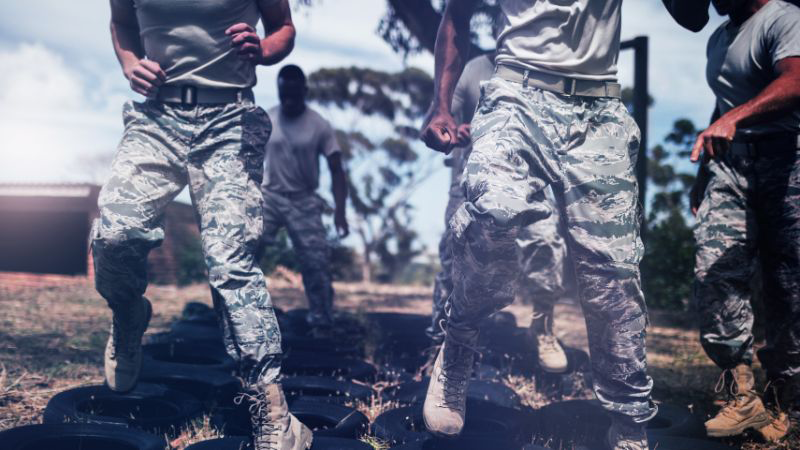
As warfare becomes increasingly associated with drones, artificial intelligence and autonomous systems, it is tempting to assume that technology will become the decisive factor on the battlefield.
According to Oxford Brookes University researcher Dr Peter Wright, that assumption misses the point.
"The most important technology," he argues, "is still the human being."
After more than two decades serving in the British Army alongside his academic career, Wright studies human performance, the science of preparing people to perform in extreme environments where physical endurance, rapid decision-making and resilience can determine survival.
His research challenges a common misconception that soldiers should be compared with elite athletes.
Instead, he describes them as tactical athletes.
"Elite athletes are like Formula One cars," he explains. "Soldiers are tractors."
The comparison is deliberate. While an Olympian may spend years perfecting one highly specialised skill, military personnel must be capable of doing many things well: carrying heavy loads over long distances, making complex decisions under pressure, providing emergency medical care, operating sophisticated technology and remaining alert after little sleep.
The challenge is not simply physical.
Modern soldiers face an ever-increasing cognitive load as new technologies are introduced into military operations. Navigation systems, communication platforms, drones and wearable sensors all provide valuable information, but each also competes for attention. The more technology a person must monitor, the greater the risk that they miss the subtle environmental cues that can keep them alive.
This growing focus on human performance has led researchers to reconsider something much more fundamental: are we looking after the people behind the technology?
Sleep, nutrition and recovery, often overlooked in discussions about defence capability, are becoming central research priorities.
Sleep deprivation, Wright explains, can impair judgement as severely as alcohol intoxication, while poor nutrition reduces both physical endurance and cognitive performance. Small interventions, such as improving sleep education, providing better-quality food or issuing simple sleep masks during deployments, could have a significant impact on operational effectiveness.
The research also explores how wearable technologies could support soldiers in training and on operations. Smart clothing capable of monitoring heart rate, breathing and body temperature could help commanders identify injuries more quickly and prioritise medical treatment, provided the technology can be used securely without revealing a soldier's location.
Although the research is rooted in military science, its implications extend far beyond the armed forces.
Most people will never carry a 40-kilogram backpack across hostile terrain. Yet many experience demanding workplaces, chronic stress and constant digital distraction. The same principles apply: adequate sleep, balanced nutrition, regular physical activity and building resilience through manageable challenges all contribute to better decision-making and long-term health.
As technology continues to reshape how we work and live, Wright believes we should not lose sight of a simple truth.
Machines may become smarter, but people remain the most valuable system of all.