

Could the building you're sitting in be affecting your health?
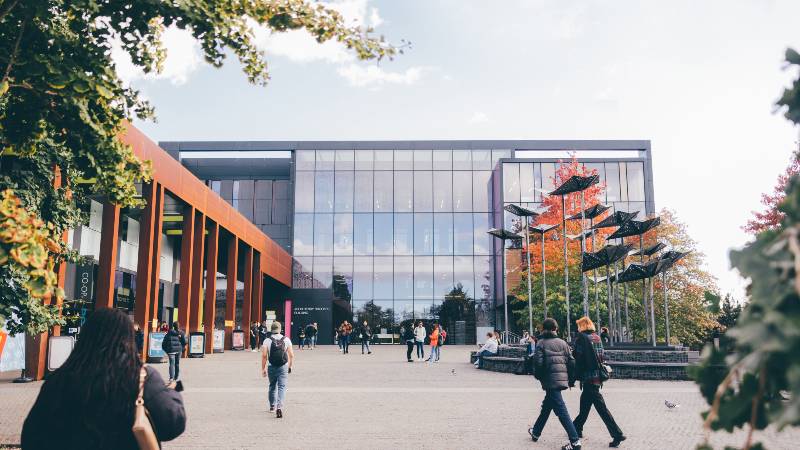
When we think about staying healthy, we tend to focus on familiar advice: eat well, exercise regularly and get enough sleep. Rarely do we stop to consider the buildings around us.
Yet the average person spends around 90% of their time indoors. The air we breathe, the light we work under, the temperature of our surroundings and even the amount of noise we experience can all influence our physical and mental wellbeing.
For Dr Jamie Sims at Oxford Brookes University, these everyday environments represent one of the biggest untapped opportunities for improving public health.
Originally working in population health and epidemiology, Sims became increasingly interested in prevention rather than treatment. Instead of asking how to help individuals once they become unwell, he began asking a different question: how can we design environments that help people stay healthy in the first place?
His research now sits at the intersection of public health, healthy buildings, regenerative design, and climate resilience, exploring how the places where we live, work, and learn influence behaviour, wellbeing, and long-term health.
Many of the factors involved are almost invisible. Poor ventilation can allow pollutants to accumulate indoors, affecting respiratory health, and concentration. Excessive noise can increase stress levels and reduce our ability to focus. Insufficient natural light can disrupt sleep patterns and mood, while uncomfortable temperatures make learning and working more difficult.
These are not simply matters of comfort - they are public health issues.
Sims believes that healthier buildings should be considered just as important as healthier lifestyles. Improving indoor environments can complement medical care by preventing illness before it develops, while also supporting better mental health and quality of life.
Crucially, his work is not confined to laboratories.
Working alongside community organisations, Sims uses real-world buildings as living research environments. Community centres and shared public spaces become opportunities to understand how buildings perform in everyday use and to identify practical improvements that benefit the people who use them most.
The research also reflects a growing challenge. As the UK works to reduce carbon emissions, buildings are becoming increasingly energy efficient and airtight. While this is essential for tackling climate change, it also makes careful ventilation and indoor air quality more important than ever. Creating sustainable buildings should never come at the expense of healthy ones.
The solution, Sims argues, is to think about health from the very beginning of the design process. Architects, engineers, psychologists, public health experts, alongside communities themselves, all have a role to play in creating spaces that are not only environmentally sustainable but genuinely support human wellbeing.
It is a reminder that health does not begin when we walk into a hospital or visit a GP. It begins much earlier - in the classrooms where children learn, the offices where adults spend their days, the homes where families gather and the community spaces that bring people together.
The buildings around us are quietly shaping our lives every day. By understanding how they affect our minds and bodies, researchers hope to create environments that do more than shelter us - they help us live healthier, happier lives.