

Plant species thriving on green roofs at Oxford Brookes University
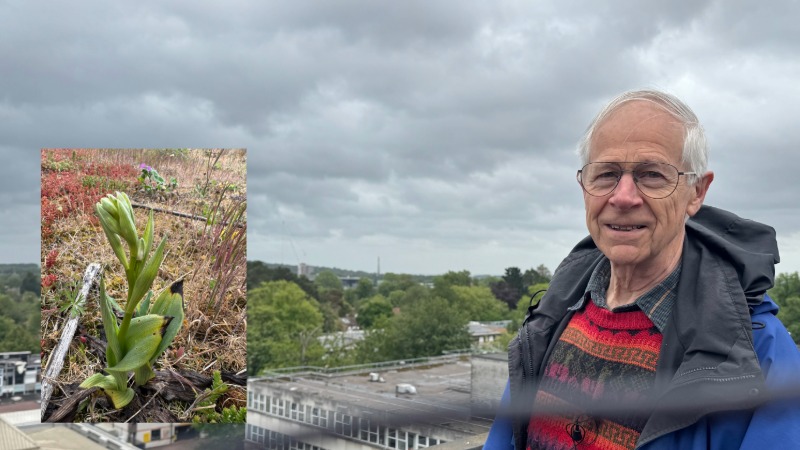
A rich ecosystem of more than 100 plant species is thriving on the green roofs at Oxford Brookes University.
The green roofs were installed on buildings opened since 2012, including the John Henry Brookes Building, the Colonnade, the Abercrombie extension, and the John Payne Building. They were originally planted with drought-resistant stonecrop (Sedum) species. Over time, their shallow soil substrate has allowed a wide range of additional plants to colonise naturally, transforming them into semi-wild habitats above the campus.These roofs now support a diverse mix of grassland and meadow species, including Wild Clary, Common Cudweed, Salad Burnet, Birdsfoot Trefoil, Ladies’ Bedstraw, Marjoram, and at least six species of Cranesbill.
The most unusual recent addition is Night-flowering Catchfly, a nationally declining annual “weed” now known in Oxfordshire from only a handful of sites in the north-west of the county. The plant’s sticky stems are thought to deter insects, while its flowers open at dusk to attract moth pollinators.
Spotted Orchids have also appeared on the more established roof areas, particularly between the John Henry Brookes Building and the Colonnade, further underlining the ecological richness developing in these elevated habitats.
Not all new arrivals are welcome, however. Dr Andrew Lack, Senior Lecturer in Environmental Biology, who has been monitoring the University’s green roofs since 2017, notes that woody seedlings such as birch, willow, sycamore, buddleia, and bramble are beginning to establish.
“Rogue tree and shrub seedlings could prove destructive for the roofs and will need to be removed,” he said.
Despite a challenging dry spring and summer, Dr Lack remains optimistic about the ecological value of the roofs and what they reveal about urban biodiversity.
“We must treasure them, whole ecosystems largely invisible above our heads but adding considerably to the biodiversity of our campus.”
To learn more about Oxford Brookes’ commitment to the environment visit the Sustainability webpage.