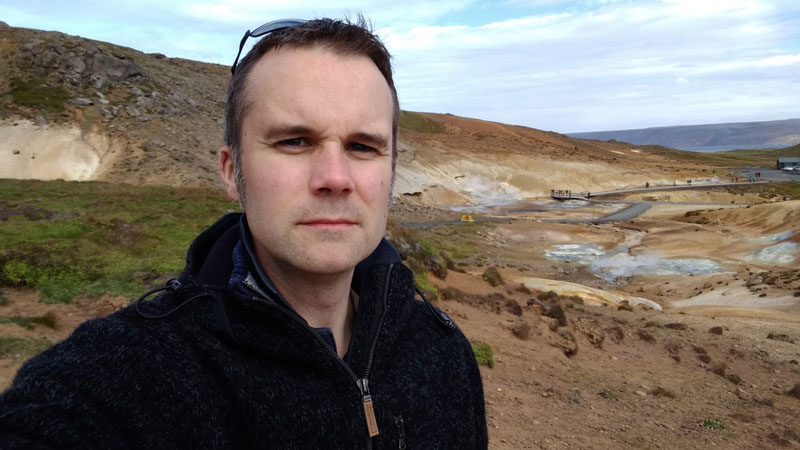

Faculty of Arts, Humanities and Social Sciences research student profiles
Thesis Title: The Socio-cultural dimensions of Western Hoolock gibbon (Hoolock hoolock) conservation in Garo Hills, Meghalaya, India
Started: September 2022
Director of Studies: Dr. Susan Cheyne
Second Supervisor: Prof. Vincent Nijman
Where are you from?
India
How did you hear about Oxford Brookes University?
I first heard about Oxford Brookes university in 2017 while working in Indonesia, with Borneo Nature Foundation. The NGO Co-founded by my PhD Director of Studies – Dr. Susan Cheyne.
What attracted you to Oxford Brookes University to conduct your research?
The primate conservation and anthropology faculty at Oxford Brookes University is one of, if not the best in the world, particularly for Asian primate research. So, I was naturally inclined to do my PhD at Oxford Brookes University.
What were you doing before?
I completed my Masters in Environmental Anthropology from the University of Kent, UK (2014-2015) – my dissertation looked at environmentalism in Iceland from the perspective of the Asatru community. I then worked with Borneo Nature Foundation (2017 – 2019) to conduct a long-term study to document ethnobotanical practices by indigenous Dayak groups (Ngaju, Ot’danum and Ma’anyan) living along the border of Sebangau National Park, Central Kalimantan, Indonesia. From 2019 – 2020 I was part of two different short-term projects – as a field researcher for Arocha India on camera trapping human-elephant conflict, and with Everyday City Labs to help map tree temples around Bangalore, India. Between 2021- 2022, I worked with Huro Programme and Sonja Wildlife Rescue Centre to work on a project to record anthropogenic disturbances to gibbons in Meghalaya. This led me to pursue a PhD at Oxford Brookes University.
How easy did you find it to settle into the research environment?
Pursuing a PhD was the right decision for my career, and I naturally fit in almost immediately at Oxford Brookes University. I attended 6 modules in my first year (2022-2023) which greatly helped me settle in as a student.
Please give an overview of your research project
My PhD research aims to comprehensively examine the socio-cultural dimensions of Western Hoolock gibbon (Hoolock hoolock) conservation in Garo Hills of Meghalaya, India, through an interdisciplinary framework that integrates natural and social sciences.
I will explore the indigenous A’chik (Garo) community's traditional ecological knowledge, including beliefs and practices such as hunting taboos and the preservation of forests, which may have played a significant role in the conservation of gibbons and other biodiversity sharing the same habitat.
I will also highlight the contribution of the local NGO, Huro Programme, which works alongside the A’chik community in gibbon rescue, rehabilitation, and release initiatives at Sonja Wildlife Rescue Centre.
By assessing historical and contemporary conservation practices, this research will provide insights into the effectiveness of in-situ primate conservation efforts, the role of the A’chick community, and the impact of rescue and rehabilitation initiatives on the long-term survival of India’s only non-human ape – the Western Hoolock Gibbon (Hoolock hoolock).
What do you enjoy about being a research student?
I have been interested in History, Anthropology and Primates since a young age. Doing a PhD allows me to fully embrace my passion and interest by focusing entirely on research.
What do you think about the research training offered at Oxford Brookes?
I have participated in a wide variety of training opportunities at Oxford Brookes University, including statistics courses, Faculty seminars about primate conservation and anthropological methods. As a student I feel like a sponge to knowledge and I look forward to learning more from the training programmes offered at the University, which will greatly improve my academic outlook whilst helping to promote my own research.
What are your future plans?
I aim to complete my thesis by mid-2026, after which I plan to continue working as an independent researcher in North East India and Borneo, alongside organizations working towards forest restoration and improving the predicament of wildlife.
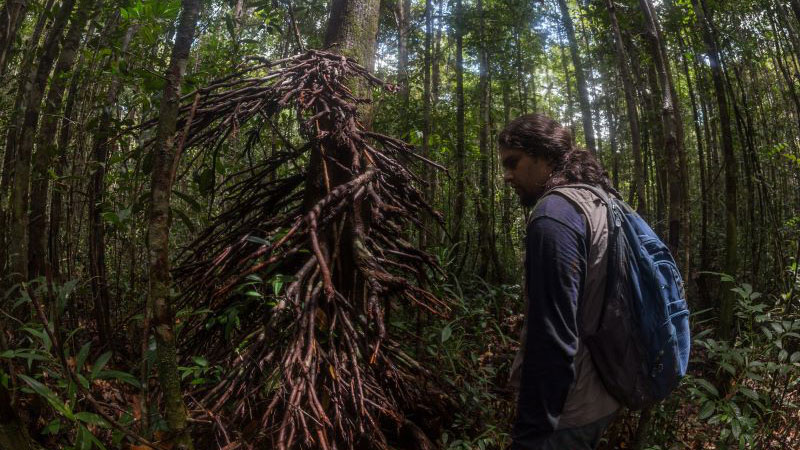
Thesis title: Understanding Conservation Education in Zoos and Primary Schools in England and Determining its Future in the Curriculum.
Started: January 2025
Director of Studies: Dr. Susan Cheyne
Where are you from?
UK.
How did you hear about Oxford Brookes University?
I first heard about Oxford Brookes University when I applied to do my masters degree in 2021. I researched Primate Conservation degrees and found Oxford Brookes University to have the best lecturers and best suited to me.
What attracted you to Oxford Brookes University to conduct your research?
I was attracted to Oxford Brookes University as I completed my masters here, so I knew the lecturers that I work well with. This meant I could work with the lecturers and develop my area of research.
What were you doing before?
Before starting my research degree I completed my BA(Hons) Social Sciences 2017-2021 and MSc Primate Conservation 2021-2022.
How easy did you find it to settle into the research environment?
Since undergrad I have had a research background which I think has helped me alot when it comes to researching for my PhD. Even though this research project is much more intense and more work is required, my background knowledge in research has helped. I think Oxford Brookes has a wide range of additional resources that are helpful for research students, for me the statistics classes were useful. As well as this there are alot of opportunities for research students to network and come together to share ideas, which is good for me because as a new student I can talk to students that are in years 2 and 3.
Please give an overview of your research project
My PhD aims to understand the use of conservation education resources in BIAZA (British and Irish Association of Zoos and Aquariums) and primary schools, to determine the future of conservation education in the primary school curriculum in England.
For this research, I will gather data on pre-exisitng online education resources and shadow the education teams at ~five zoos in England and interview ~25 primary teachers to understand if and how conservation education can be introduced into the primary school curriculum. The fieldwork for this research will take place in 2026 and 2027.
My research will provide a policy brief that can be used at BIAZA and in primary schools to successfully work together to teach young children conservation education.
What do you enjoy about being a research student?
I have always really enjoyed researching and learning about new topics, and being a research student allows me to be around other people that have similar interests. Even though the majority of the other research students are in different faculties it is helpful for me to talk to other students. As a new research student I think the biggest challenge so far has been knowing where to start, however speaking to other students and my advisors, I have been able to come up with a plan.
What do you think about the research training offered at Oxford Brookes?
I think there is a wide variety of training opportunities offered by Oxford Brookes on a range of subjects but as I have only just started I have not had the opportunity to go to many yet. Though the ones I have attended have been very helpful and have reassured me that I’m at the right stage.
What are your future plans?
At this time, I am unsure whether I want to work in a primary school or in a zoo education team, however, I do know that I want to continue inspiring children to get excited about conservation.
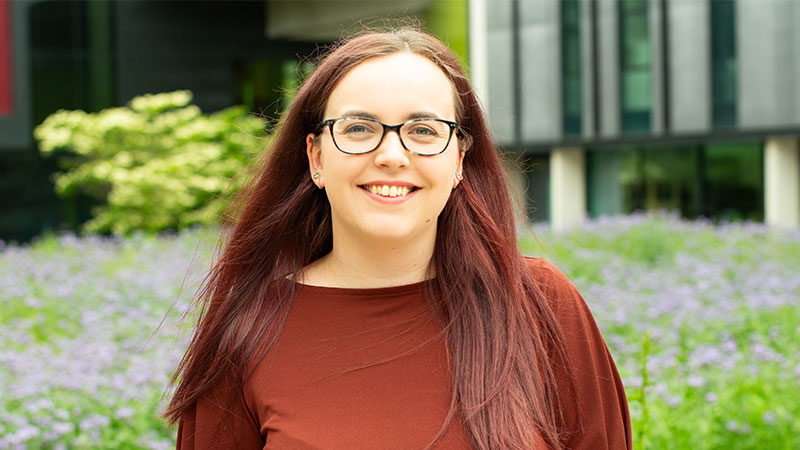
Thesis title: Orangutans in the New Frontier: Strategies for Survival in Altered Landscapes’.
Started: January 2017
Director of studies: Professor Vincent Nijman
Where are you from?
Bristol
How did you hear about Oxford Brookes University?
I did my MSc in Primate Conservation at Oxford Brookes University so I already knew the faculty and staff quite well. I was offered the chance to conduct research at a field site in Indonesia, so returning to Oxford Brookes University for my PhD seemed like a natural fit. My first impressions were that everyone was very welcoming and incredibly supportive. The facilities available to students have improved immensely since I undertook my Master’s degree, so I am excited to have returned to the new site at Headington.
What attracted you to Oxford Brookes University to conduct your research?
Having previously studied at Oxford Brookes, I felt that the Department of Social Sciences was the best place to return for my PhD. The staff are all leaders in their research fields, and although I have worked in my field for a long time, I knew that I could learn from them and increase my skillset. I needed a team that understood the location and situation I was heading into, spoke the language, understood the culture and religion, and could provide long-distance support for me in the field; Oxford Brookes University could provide all of this. I also love the community-feeling of the primate group and the networking opportunities with the MSc course alumni. I am grateful for the support I have received from the University despite being thousands of miles away in the middle of the rainforest!
What were you doing before?
Before starting this PhD, I managed a long-term orangutan research site in Indonesia. This involved managing staff, students and volunteers, organising data collection and general camp running. I learned so much from that role and was given many different opportunities such as presenting at an international conference and appearing in a National Geographic program about orangutans. I was given the chance to learn more about data collection in the field and more about the logistics and responsibility of running a remote field site. I developed as a person, scientist and mentor.
How easy did you find it to settle into the research environment?
I instantly felt at home when I started my PhD and the new facilities at Headington are fantastic. We now have a great postgraduate library, bigger and better study areas, and the ability to acquire licence software and download remotely. The postgraduate team are supportive and helpful, and it has been easy to contact different departments and staff for assistance.
Tell us about your research
Previous research has highlighted that orangutans are able to exist within mixed agroforest landscapes; however, the extent to which this affects their health remains largely unknown, as is the number of orangutans that reside within these landscapes. Given the current situation however, it appears that orangutans are struggling to survive long-term in these disturbed areas. In 2012, research led by Prof Serge Wich advised that where forest is converted to plantation, over time over 95% of the original orangutan population is lost.
Exactly how great apes alter their behaviour in reaction to altered landscapes and their inherent risks remains uncertain but is of paramount importance for the long-term survival of animals whose ranges comprise of such habitats. Therefore, it is necessary to investigate whether and how the survival prospects of orangutans could be improved in these areas. This interdisciplinary study seeks to quantify this decrease by looking at disturbance (an oil palm concession) and the western Bornean orangutan sub-species.
This project has been designed in conjunction with International Animal Rescue (herein known as YIARI) in West Kalimantan in Indonesia. YIARI has been working in the PT Kayung Agro Lestari oil palm plantation for several years and have been taking data on the orangutans that live in two forested areas in this plantation. It is rare that access is given to work in such a controversial landscape; however YIARI have been given permission for research to be undertaken in this concession.
This research is important as very little is known about orangutan movements within oil palm; we know they exist but we do not know the extent of their behavioural plasticity in these areas. We need to examine if conflict exists in this plantation and explore mitigation strategies if necessary. Most importantly from this research, we need to understand how orangutans utilise this habitat and the implications for their continued survival if access to this area were to change.
Research Objectives
Objective 1: Determine space-use patterns of orangutans in oil palm to examine movement and habitat utilisation.
Objective 2: Examine orangutan behaviour regarding activity budget and dietary composition in relation to food availability.
Objective 3: Quantify how important continued access to this oil palm concession is for this orangutan population using data regarding crop-foraging, dietary composition and oil palm shoot loss.
Objective 4: Assess whether there are any orangutan-human interactions within this plantation and assist with options for conflict mitigation.
Anticipated Results
It is expected that this project will be one of the first of its kind to shed light on orangutan behaviour in a monoculture. It will provide information on activity budget, nutrition and movements. Currently we do not know how much of the plantation orangutan utilise, or indeed whether they potentially live in the plantation. At this time, the anticipated results are that orangutans move within the plantation but we do not know the extent. Therefore, this project will fill in the gaps in our knowledge.
Implications of this project
First and foremost, it will be the completion of my PhD. I also hope to publish this study in a number of journals, as well as presenting my results at international meetings. In terms of orangutan conservation, the implications of this project will be important and far reaching. The training we will continue to offer staff within the plantation, with regards to a no-kill policy, corridor-creation and conducting research, will be invaluable if we are to empower local people to look after their wildlife. I will be evoking with the plantation owners on best practice guidelines for use in their plantation, which can then be rolled out to their other sites, as well as the potential to work with other companies. From a research perspective, this project will shed light on an aspect of orangutan life that has rarely been studied on a long-term basis. We will be able to begin to answer questions as to the scale of which orangutans rely on this landscape, how important connectivity is and how they are modifying their behaviour to cope with this change in environment. If orangutans are not coping in this environment, we can begin the work into mitigation strategies - looking into policies in order to protect these apes.
How has the Santander scholarship helped your research project and progression of your research degree programme?
Given the sensitive nature of my project, I really struggled to get funding to study in an oil palm plantation. As I am a self-funded student, I got to a point in the field where I would be unable to pay my second-year fees. Receiving this scholarship was amazing and took a huge weight off my shoulders. It allowed me to reallocate my own money in the field so that I could purchase more equipment such as a new GPS, compasses and watches for the staff. Without this scholarship, I don’t think I would have been able to continue my field work or pay my programme fees.
What do you enjoy about being a research student?
I love being a research student. I relish a challenge, and nothing is harder than creating a project and self-funding it. I enjoy the social aspects of being a student; meeting like-minded people with great experiences that they can share and advice they can impart.
As you can imagine, working in the field comes with a plethora of issues. However, because I had already worked in a similar area of Indonesia for several years and had such a strong team at Oxford Brookes University, I never felt like any of these issues couldn’t be resolved quickly. There are always delays with the permits you need to conduct research, the weather is always problematic, and working in a foreign country produces problems of its own. With help from Oxford Brookes University and my previous work, my project evolved to meet these challenges and present solutions that kept all stakeholders happy.
What do you think about the research training offered at Oxford Brookes University?
The research training has been nothing short of fantastic. The inductions really set me up for what to expect from Oxford Brookes University and what they expected from me. Now I am back from the field, I can undertake training in software that is relevant for the analysis of my data. There is also the possibility of 1-to-1 sessions with different advisors which I think will be hugely beneficial for me.
What are your future plans?
At the moment, I am focusing on analysing my data and writing my thesis. I will also be presenting my work at an international conference soon and I am hoping to present at more over the next year. On completion of my PhD, I hope to publish my work and pursue a career in the environmental sector. Working with an oil palm company has really opened my eyes to the role that businesses play in conservation and the environment, so I am considering moving into this as a potential field.
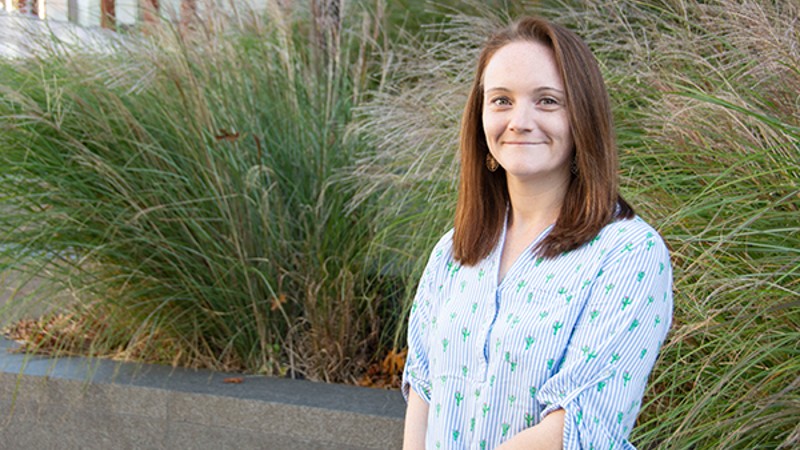
Thesis Title: The Upper Clyde Shipbuilders Work-In of 1971/72
Started: September 2022.
Director of Studies: Prof. Glen O'Hara
Where are you from?
Bourne End, near High Wycombe
How did you hear about Oxford Brookes University? Did you attend a Postgraduate Fair?
Yes, I attended a postgraduate fair in May 2019. I had called Dr Viviane Quirke to discuss my prospects and at the fair I was encouraged to apply by Dr Thomas Robb.
What attracted you to Oxford Brookes University to conduct your research?
I completed my MA at Brookes between Autumn 2019 and summer 2020, during the initial stages of the Covid crisis. Brookes managed the transition from face-to-face to online teaching with admirable speed and support for all its students. I completed my MA with distinction and received the Detlef Mühlberger History prize of the year. This success and the relationship with my supervisor, Prof. Glen O’Hara, started me thinking about a suitable PhD topic that we could work on together. We went through a broad range of subjects before agreeing on my current research area.
What were you doing before?
I trained as an architect and was a co-founder of A&Q Partnership in the 1980s. I have recently retired, but the practice continues with new management from within the firm
How easy did you find it to settle into the research environment? What do you think about the support and resources available to research students?
The MA was a good introduction, and Covid restrictions during that period reflected some of the nature of a PhD. It is an individual endeavour where you are very much in charge of the pace. For this reason the connection with Brookes is very important and the support I have received from both my supervisors and the Graduate College has been excellent.
Overview of your research project.
My research is about the Upper Clyde Shipbuilders Work-in of 1971/72. The project’s landscape is Glasgow’s River Clyde in the early 1970s and the declining heavy industries that had once justified Glasgow’s claim to being the ‘Second City of the Empire’. Before World War One the city was a centre of excellence in the shipbuilding, railway and armament industries, when 100,000 people worked in Glasgow’s shipyards alone. But by the 1960s this had reduced greatly as British shipbuilding declined under competition from Japan, Sweden and West Germany who had built new shipyards using modern methods of production. British shipyards were still characterised by outdated practices and craft-based demarcations.
In 1966 a government inquiry recommended that the industry should be re-organised nationally into larger groups and in 1968 five surviving Glasgow yards merged to create Upper Clyde Shipbuilders (UCS). The new company was troubled by historic debt and required further funding from the Labour government. But 1970’s new Conservative government had a ‘no lame ducks’ industrial policy and refused a further request in June 1971, effectively forcing UCS into liquidation. The loss of the remaining 8,500 jobs at UCS together with perhaps 20,000 jobs from local suppliers would be a disaster, as unemployment in the region was already high. However, UCS was highly unionised and the shop stewards, led by Jimmy Reid and Jimmy Airlie, anticipated the crisis and thought up a strategy to fight back.
The stewards shunned strike action, occupied the yards and continued to build the ships that UCS were still contracted to complete. This was possible because a) the necessary steel was available, b) the skilled workforce supported the strategy and c) the ‘work-in’ became a national cause célèbre due to substantial media coverage. Styling the campaign as the ‘Right to Work’ the shop stewards avoided being seen as ‘work shy and disruptive’. Whilst ministers refused to negotiate the shop stewards maintained the work-in and by February 1972 the government made a ‘U-turn’ and agreed to rescue the yards and their workforce.
The work-in was primarily successful because of the solidarity of the shipyard workers. But also because of firstly, the public support they received (notably £1,000 from John Lennon and Yoko Ono) and secondly, the work-in’s leaders were highly articulate advocates for the campaign and secured many victories against opponents that underestimated them.
The events have been written about before, but my research takes a retrospective view exploring wider issues such as male identity, family, class, solidarity and localism in the wider shipbuilding communities, and how these may be linked to ideas of ‘civic nationalism’ in a devolving Scotland. A trip to Glasgow to interview surviving shop stewards and associated academics has provided eight hours of oral history material complementing the archival research and supporting the theoretical propositions.
What do you enjoy about being a research student?
The best part is learning more about something that fascinates you, particularly interviewing people who were part of the actual events. Especially when those events are on the cusp of moving from a living memory to a recorded history, when it is important to grasp the last verbatim recollections. Although transcribing interviews in various forms of the Glaswegian accent can be difficult because machine reader programmes and systems find it harder than others to pick up, like most parts of a PhD it is best tackled in small discrete packages of work. That way deadlines are achievable and soon begin to build into the bigger dissertation.
What do you think about the research training offered at Oxford Brookes?
I have found the training readily accessible and very helpful. From going back to learning how to use Microsoft Word properly to enjoyable informal on-line writing retreats where it is easy to compare notes with other students. The recent provision of a Doctoral Research Centre in the Clerici Building is a major boost to face-to-face communication and very welcome.
What are your future plans?
Some are about continuing my research, some are about enjoying retirement, and some are about something new, screenwriting.
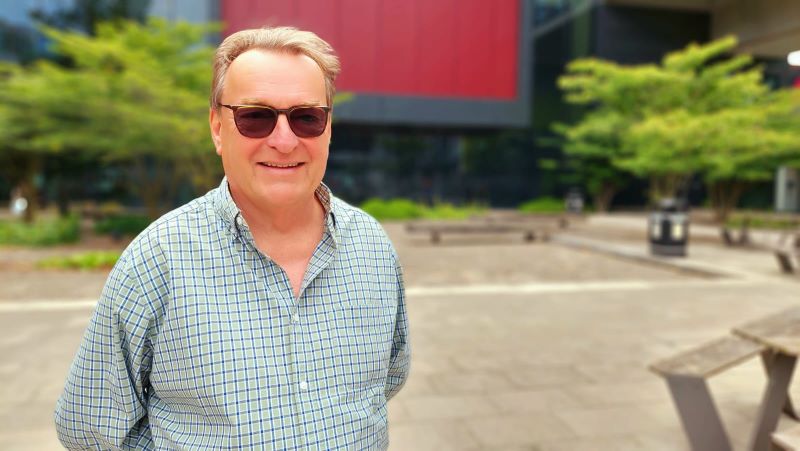
Thesis title: My provisional thesis title is ‘How neuroscientific insights on curiosity, creativity, and problem-solving can help guide and enrich existing approaches to enquiry-based learning.’
Started: 2022
Director of Studies: Dr James Percival
Where are you from?
Cheltenham.
How did you hear about Oxford Brookes University?
I first became aware of the EdD programme at Brookes through a teaching colleague who is completing his own EdD now. I already knew about the university through other colleagues, friends, and family – and all have spoken highly about Brookes.
What attracted you to Oxford Brookes University to conduct your research?
A few academic and practical reasons attracted me to Brookes; firstly, the geographical location is ideal being only an hour from home. Additionally, the course programme offers a blend of taught and research sessions and, having completed a taught MSc degree several years ago, this structure appealed to me.
What were you doing before?
I am currently a lead teacher of Geography at an independent school. Prior to my current position I taught in grammar schools in Kent, and I have been an examiner for GCSE and A-Level examination boards as well. Finally, in my previous life before teaching, I worked as a highways engineer for a local authority in the south-east of England.
How easy did you find it to settle into the research environment?
Having already completed a Masters degree (albeit a long time ago now) settling back into independent research has been relatively seamless so far. The support on offer, from staff as well as the range of resources online/on campus, has been excellent throughout and I always get swift replies to any queries I have had which is great.
Please give an overview of your research project
Enquiry-based learning is becoming more prevalent in educational institutions, particularly in the sciences and humanities, and was first pioneered as a working concept in the 1950s in the American education system. However, given the great strides in cognitive neuroscience that have been made since the advent of fMRI in the early 1990s, I feel that existing models of enquiry-based learning (such as those of John Dewey and Joseph Schwab) do not fully capitalise on the breadth of understanding that we now have about how the brain generates ideas, solves problems, and makes decisions - all cognitive processes that underpin how the brain enquires best.
Therefore, I believe that current philosophical approaches towards enquiry-based learning can be revised and updated by applying an empirical understanding of neuroscience, together with effective application of cognitive and psychological concepts - for example delivered through professional development programmes. This would greatly enrich the successful delivery and effectiveness of enquiry-based learning in the classroom, especially in the context of working through and generating actions and solutions in response to complex global issues.
What do you enjoy about being a research student?
I enjoy the blend of independent research and coming together every so often with my fellow researchers. We are lucky in that we have a wealth of online resources at hand, as well as the physical university campus. I also enjoy the relationships we have been able to build with academic staff who always value what we have to say and offer in tutorials. Perhaps the biggest challenge is a logistical one: as a teacher and parent studying for a professional doctorate it’s all about finding the time to read papers and get stuck into the research areas that I am interested in. To try and get around this (as best I can!) I prioritise what I wish to read up on in relation to the assignments I have and work back from that.
What do you think about the research training offered at Oxford Brookes?
There are plenty of opportunities for further training courses here at Brookes – we are always being invited to various enrichment and development sessions which is great. Hopefully, as time goes by, I will be able to start taking more advantage of these!
What are your future plans?
I hope to be able to apply the research and knowledge I have gained through completing my doctorate in my teaching, and to ultimately oversee teacher training programmes based around enquiry and cognitive science in school.