








Social Care

About us

The Social Care research group explores and address the current challenges in health and social care, drawing on existing expertise available within the OxInAHR, covering nursing, social care, mental health, occupational therapy, nutrition, and physical activity.

We focus on research concerning children, families, and adult social care, investigating topics from the prenatal period up to age 18, including safeguarding, child protection, and family wellbeing. This also extends to areas such as domestic violence and the development of resilience.

We collaborate with health and social care providers and academic partners both nationally and internationally, including with organisations like the School and Public Health Nurses' Association and the Queen's Nursing Institute, as well as the Nursing School at Kristianstad University, Sweden. 

Contacts

  • Dr Sarah Bekaert (Children social research lead)
  • Dr Olga Kozlowska (Adult social care lead)

Girl talking to a social worker

Research impact

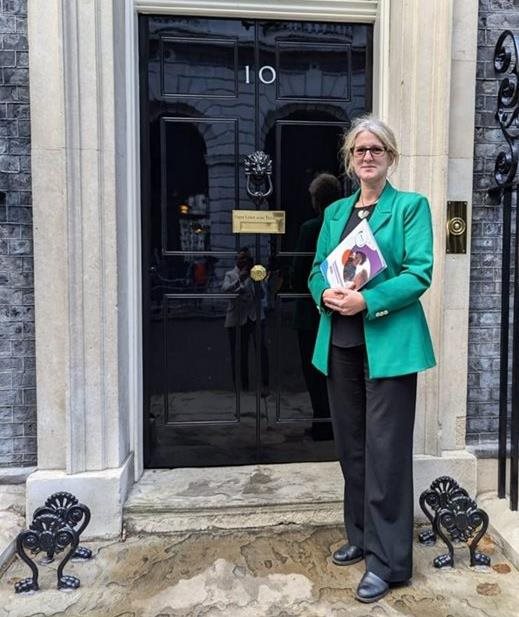
Dr Sarah Bekaert outside No 10 Downing Street

Helping to shape policy

Our collaborative research with the School and Public Health Nurses Association led to the publication of a report presented to the Houses of Parliament. The report concludes that the school nursing workforce is in crisis, with a diminishing number of nurses struggling to meet the growing health needs of children. This has led to inconsistent service delivery and a "postcode lottery" for care. The report calls for urgent government policy changes and investment to address this, aligning with a campaign for "a school nurse in every school." This work has also led to resource development for public health nurses in schools. 

Breaking the Cycle: Targeted Intervention in Hospitals 

Working in partnership with the Thames Valley Violence Prevention Partnership, our research has explored early intervention strategies to tackle youth violence. By placing mentors in five hospital emergency departments, our Hospital Navigator Scheme engaged over 70% of referrals, successfully interrupting cycles of violence and vulnerability. The program's impact is clear: 77% of participants did not return to the hospital within six months, and many reported improvements in housing, school, employment, and emotional well-being. A resource has now been developed to help other regions set up their own A&E navigator programs, allowing this effective model to be used across the country.

Leadership

Dr Olga Kozlowska

Senior Lecturer in Research and Knowledge Exchange

View profile for Olga Kozlowska

Membership

Staff

Name Role Email
Katy Burch Assistant Director kburch@brookes.ac.uk
Dr Jane Carpenter Programme Lead, Midwifery and Lead Midwife for Education jane.carpenter@brookes.ac.uk
Dr Georgia Cook Research Fellow gcook@brookes.ac.uk
Dr Christopher Dodd Postdoctoral Research Assistant c.dodd@brookes.ac.uk
Ms Monica Dunman Lecturer Social Work mduman@brookes.ac.uk
Dr Elizabeth Jestico Senior Lecturer in Children's Nursing ejestico@brookes.ac.uk
Dr Kathy Mumby-Croft Lecturer in Adult Nursing kmumby-croft@brookes.ac.uk
Professor Louise Taylor Professor of Education and Student Experience louise.e.taylor@brookes.ac.uk

Students

Name Thesis Title Supervisors Completed
Helen Bosley Maternal Attitudes to Antibiotic Use: A Community Based Case Study

Active

Dr Sharon Brownie Nursing and Health Service Leadership: The Power to Influence Professor Debra Jackson 2021
Georgia Cook Parental influences on children’s sleep Professor Luci Wiggs 2019
Samantha Jane Donohue What is the experince of professional enjoyment in nursing? 2022
Monica Duman How are chronologies and neglect assessment tools used by health and social care practitioners to identify and assess child neglect? Dr Sarah Bekaert 2023
Briony Enser Alcohol Driven Harm to Others Professor David Foxcroft 2018
Kimberley Harcourt Weight loss and weight loss maintenance using exercise, nutrition and behaviour change strategies among an overweight/obese, pre-diabetic adult population 2019
Lauren Harding How do school nurses identify and work with school-aged children at risk of child abuse and neglect? Dr Sarah Bekaert 2020
Jon Hyslop How Do Peer Networks Enable Service Users and Informal Careers to Obtain and Manage Personal Budgets 2019
Elizabeth Jestico What are parents’ experiences of being supported by significant others, when faced with making decisions about their child’s cancer case? A phenomenological study

Active

Karen Lascelles Experiences and Support Needs of Adult Carers of Adults at Risk of Suicide: A Mixed Methods Doctoral Research Study 2022
Claire Litchfield Is the use of water immersion for women in labour or giving birth both safe and effective as a method for improving rates of normal birth for women who are obese? Dr Jane Carpenter, Dr Louise Hunter

Active

Catherine Lowenhoff Moving on from ‘Listening Visits’: a mixed methods, multi-phase study exploring the support that health visitors provide to mothers with mental health problems

Active

Mark Mason The illegal drug use behaviours and social circumstances of older adult regular Class A drug users 2015
Elaine Strachan-Hall Robots in Nursing: False Rhetoric or Future Reality? 2022
Fiona Tierney Families’ experience of using sleep-related routines with their young children Professor Anna Barnett, Dr Georgia Cook, Professor Luci Wiggs 2023
Suzanne Watts An exploration of the referral and communication systems between primary health care professionals and children's social care services

Active

Diana Yardley An exploration of health care professionals’ perceptions of non-medical factors affecting management of Type 1 diabetes in children Dr Olga Kozlowska, Dr Sarah Bekaert

Active

Projects

Active projects

Project title and description Investigator(s) Funder(s) Dates

Mitigating the harms of maternal related Adverse Child Experiences

This project looks at which health visiting models in England are most promising for mitigating the harms of maternal related Adverse Child Experiences.

Professor Ruth Gilbert, Dr Katie Harron, Dr Jenny Woodman NIHR From: February 2022
Until: January 2026

Unseen struggles: Exploring the effects of parental imprisonment on children and families

This research focuses on the hidden impact of parental imprisonment on children and families. Children with a parent in prison are more likely to face poor mental health, stigma, disrupted education, and long-term social and emotional difficulties. Yet there has never been a formal system in the UK to identify and support them. In 2021, Thames Valley Police and the Thames Valley Violence Prevention Partnership launched Operation Paramount, the first data-led initiative in the UK to identify children affected by parental imprisonment. By securely cross-checking prison reception data with other official records, the programme identifies affected children in the Thames Valley and offers support through the charity Children Heard and Seen. This research explores how effective Operation Paramount is in identifying and supporting families. It also gathers the views of non-incarcerated parents and carers to understand the real-life impact of imprisonment. 
Dr Sarah Bekaert Thames Valley Violence Prevention Partnership From: October 2021

Focused Diversion project - Mentoring to reduce youth violence

Reducing youth violence is an increasing priority — and mentoring is proving to be a powerful tool. The Focused Diversion project, in partnership with the Thames Valley Violence Prevention Partnership, is embedding mentors within local councils. These mentors support young people who have recently come into contact with the police, meeting with them regularly to build trust and connect them with the right services. The aim is to steer young people away from further offending by offering early, tailored support — helping them stay in school, avoid exclusions, and make positive choices.

Dr Sarah Bekaert Thames Valley Violence Prevention Partnership From: January 2025

Fostering digital inclusion in adult social care

This project aims to understand and improve the rollout of digital technologies in social care. Social care has fallen behind other sectors in using digital technology to improve outcomes for adults. We are seeking partners, both academic and non-academic, to collaborate on studies that address the challenges of using these technologies in social care. Our goal is to contribute to the discussion and provide recommendations for how digital services can be implemented effectively and inclusively to improve outcomes for everyone who needs them. This is a critical step for the future of integrated care models, which seek to improve outcomes across the entire care pathway.

Dr Christopher Dodd, Dr Olga Kozlowska Brookes Research Excellence Award From: January 2023

Characteristics of the social care workforce

Collaboration with the Brightwater Care Group in Perth, Australia to explore the impact of characteristics of the social care workforce on delivery of care in England and Australia. Our research priorities include care for individuals living with disability and care for the elderly.
Dr Christopher Dodd, Professor Catherine Henshall, Dr Olga Kozlowska OBU Research Excellence Award From: January 2024

Completed projects

Project title and description Investigator(s) Funder(s) Dates

ERICA

Stopping Child Maltreatment through Pan-European Multiprofessional Training Programme: Early Child Protection Work with Families at Risk.
Alex Baldacchino, Eija Paavilainen European Commission From: December 2019
Until: December 2021

A synthesis of the evidence for effective parenting support

Dr Helen Aveyard, Dr Kathy Mumby-Croft Public Health England From: March 2021
Until: January 2022

Thames Valley Hospital Navigator Scheme: interrupting cycles of violence and vulnerability

Reducing youth violence is a growing priority, with mentoring showing strong potential. The Thames Valley Hospital Navigator Scheme, in partnership with the Thames Valley Violence Prevention Partnership, placed trained mentors in emergency departments to support young people arriving due to violence or risky behaviour. Running in five hospitals, it engaged over 70% of referrals, with most receiving ongoing support. After six months, 77% had not returned to the hospital, and many saw improvements in housing, school, employment, and emotional well-being.  Read the summary and full report.

Dr Sarah Bekaert Brookes Research Excellence Award From: March 2021
Until: March 2025

Using data and technology to support survivors of domestic violence

Professor Caroline Bradbury-Jones, Dr Joht Singh Chandan NIHR From: June 2021
Until: August 2022

School nursing and safeguarding: Insights from the Covid-19 pandemic

A UK-wide study surveyed school nurses about their roles and experiences during the COVID-19 pandemic.
Over 60% reported reduced contact with children and families, while 86% faced barriers to identifying safeguarding or child protection needs. More than 79% said their work with vulnerable children was negatively affected. The study also highlighted the limitations of technology and stressed the need for in-person access.

The average English school nurse now cares for over 4,000 pupils. The findings urge policymakers and professional bodies to support school nurses in leading public health efforts, calling for sufficient staffing to meet the evolving needs of children and young people. The research informed the 'School Nurse in Every School' campaign and ‘The Forgotten Frontline’ report of which was presented to Parliament in October 2024.

Dr Sarah Bekaert GNCT From: September 2021
Until: August 2022

Example Publications