

Biological Sciences (Genetics and Genomics) (with Foundation Year)

BSc (Hons)

UCAS code: C40F

Start dates: September 2026

Full time: 4 years, 5 years if optional placement taken

Part time: Up to 11 years

Location: Headington

School(s): School of Biological and Medical Sciences

Find a course

Expand

Overview

Do you want to help stop diseases before they show up? Do you want to be at the cutting-edge of genetics and genomics research? You’ll get to experience how genomics impacts all areas of bioscience. Whether it’s healthcare, endangered species, or cancer research, we’ll help enhance your understanding and analytical skills.

Our Biological Sciences (Genetics and Genomics) with Foundation Year, starts with progressing your academic skills. Passing this foundation year leads to our Biological Sciences (Genetics and Genomics) degree, where you’ll look at rapid advances in DNA sequencing and use labs that are equipped with modern equipment where you’ll sharpen your computational analysis and molecular and cell biology laboratory skills. 

We’re committed to your success and want you to thrive. We’ve created a nurturing environment and our small group sizes are core to this. 

As a graduate, your skills and experience will mean you can make a lasting impact on the health of society. 

Order a Prospectus Ask a question Attend an open day or webinar

Why Oxford Brookes University?

  • Perfect preparation
    Build essential study skills with an integrated foundation year. Gain academic confidence, improve critical thinking, and strengthen subject knowledge for your degree journey.
  • Student support

    We pride ourselves on the connection our staff have with our students. This will support your academic and personal development.

  • Employment success

    We offer modules to help you identify interesting career paths and to develop your professional skills. These are supported with the opportunity to gain work experience through a placement year, a work experience module and your research project.

  • Strong industry links

    We enjoy strong links with organisations like biotech companies and research centres. We’re regularly updated on important industry developments.

  • Amazing facilities
    A range of teaching labs with industry-standard equipment, as well as research labs for projects.
  • Additional language modules

    Our university-wide language programme is available to full-time undergraduate and postgraduate students on many of our courses, and can be taken as a credit on some courses.

  • Study abroad

    You may be able to go on a European or international study exchange while you are at Brookes. Most exchanges take place in the second year. Although we will help as much as we can with your plans, ultimately you are responsible for organising and funding this study abroad.

Course details

Course structure

On your Foundation Year in Life Sciences course, you’ll gain the necessary scientific and mathematical background required for you to step straight on to your honours degree.

In the first year of your degree you’ll focus on applying fundamental biology to real life issues and explore the classification of the: 

  • living world
  • evolution
  • cell function
  • chemical principles. 

Key themes include cellular organelles and their functions, and chemical bonds and structures. You’ll learn how to analyse genomes and extract DNA in your second year and examine genetics and data carpentry. 

You can gain work experience as an optional industrial placement or as part of a final year module without extending your degree.

In your final year, you’ll be able to specialise in your areas of interest. Your research project can be done in conjunction with companies from our Bioinnovation hub or within our Bioimaging or Functional Genomic Centres.
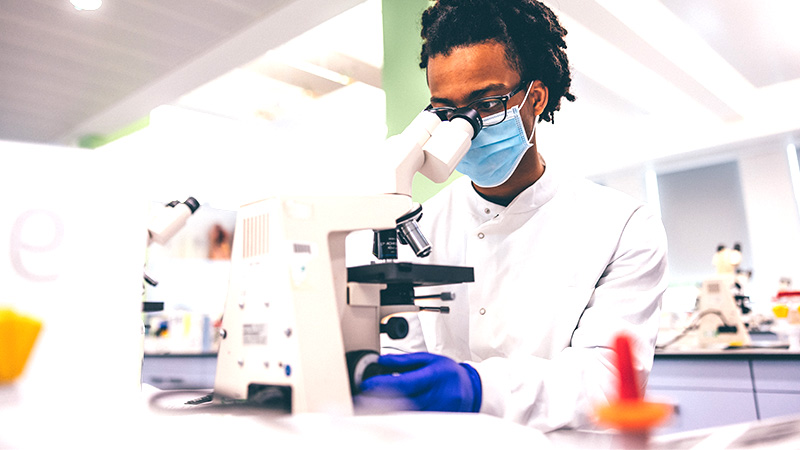
Student studying in a lab

Learning and teaching

Throughout the course we focus on applying fundamental biology to real life issues. You will apply your knowledge in practical settings and have the opportunity to develop a range of skills in lab techniques, data handling, computing, report writing, oral presentations and teamwork within an environment that encourages openness and participation, where everyone feels respected, supported and valued and understands their own personal responsibility for equality and inclusive practice. The curriculum facilitates the development of culturally aware graduates, with ethical, sustainable and open approaches to thinking and practising the biosciences.

You have the opportunity to gain skills in:

  • molecular techniques (for the study of DNA, RNA and proteins)
  • bioinformatics
  • advanced microscopy
  • cutting edge methodologies for the study of ecology, evolution and developmental biology and much more.

Our teaching methods include: 

  • lectures
  • practicals
  • tutorials
  • seminars
  • surgeries.

Assessment

Our assessment methods are extremely varied and include:

  • essays and reviews of the literature
  • reflective portfolios
  • examinations
  • laboratory or field practicals
  • scientific reports
  • posters
  • oral presentations, videos, vivas.

The diversity of assessments is designed for inclusive learning enabling students to achieve their full potential by drawing on their strengths and prior experiences. 

Reflective learning is encouraged through use of self, peer and staff formative feedback on assignments, group work and project work, and reflective diaries all of which are designed to develop critical self-awareness and personal literacy.

Assessment is designed to shape and develop learning, not simply measure it. 

Study modules

In your foundation year, you can expect around fourteen hours of contact time per week. In addition to this, you should also anticipate a workload of 1,200 hours per year. When you begin your degree programme, you can expect around 12 hours of contact time per week and anticipate a workload of 1,200 hours per year. Teaching usually takes place Monday to Friday, between 9.00am and 6.00pm.

Contact hours involve activities such as lectures, seminars, practicals, assessments, and academic advising sessions. These hours differ by year of study and typically increase significantly during placements or other types of work-based learning.

Foundation Year

Compulsory modules

  • Foundation Academic Skills

    The module is designed as an introduction to the styles of learning and skills expected of students in higher education, and to the particular academic culture of Oxford Brookes University. You will develop a reflective approach to study, centred on learning new skills such as referencing, source evaluation, academic writing and communication skills. This will prepare you for your studies in other modules on the foundation year, as well as your undergraduate degree. 

  • Foundation Biological Sciences

    Biology is one of the most exciting and challenging sciences you can choose to study. This module aims to provide you with a fundamental understanding of biology, while at the same time developing your study skills to a level required for success on your undergraduate degree. You will be encouraged to explore and gain confidence in a broad range of topics including environmental science, biomedical science, ecology, anatomy and physiology.

  • Foundation Chemistry

    This module is designed to improve your knowledge of the basic principles of chemistry that underpin a modern approach to the life sciences. It also aims to encourage you to ask fundamental questions of how science develops and to increase awareness of the experimental basis of scientific ideas. The overarching theme is the relationship between experiment, observations and the atomic model of matter. The module will also give you the opportunity to practise using simple mathematical ideas in more applied contexts.

  • Foundation Mathematics I

    This module is designed to give you the mathematical competence required to cope with degree level science modules. Throughout the module you will develop mathematical problem solving skills and the ability to present mathematical arguments clearly and succinctly.

  • Foundation Mathematics II

    This module will help you to build on your mathematics knowledge gained on module I and will continue to give you the mathematical competence required to cope with degree level science modules. Throughout the module you will continue to develop mathematical problem solving skills and progress your ability to present mathematical arguments clearly and succinctly.
  • Foundation Project

    This module offers you the opportunity to build on the skills developed in your other modules and to apply skills of collaborative learning and independent study. You will have the opportunity to further your understanding of an area of interest you have by designing and carrying out a project, which may be literature based or experimental.

Year 1

Compulsory modules

  • Cell Biology and Genetics

    Cell biology is the study of how cells work and how they differentiate to form multicellular organisms. 

    This module is your introduction to cell function - you'll study the different types of molecules within cells and build your knowledge about cellular organelles and their functions. You’ll explore the increasing levels of complexity and the diversity of cell types that have arisen through evolution.  

    On this module you’ll also look at genetics. What are genes and how do they work to bring about the traits that we observe in organisms? We will examine cell division in detail and look at how DNA is transcribed into RNA which translates into proteins that do most of the work in the cell.
     

  • Communicating Science

    For impact, scientific research findings need to be communicated to reach the relevant audience in a timely manner. The relevant audience can be

    • researchers
    • policy makers
    • public. 

    Science can be communicated by written reports to oral presentations. 

    On this module you’ll have Personal and Academic Support Scheme tutorials over your first year. You’ll receive the support and guidance to adjust to the academic demands of university. Also you'll develop key skills like:

    • reading
    • critical thinking
    • literature searching
    • reporting 
    • presentation in various formats  
    • presenting to varied audiences.
       
  • Quantitative Skills for Life Science

    On this module you’ll be introduced to, build upon and practice the key quantitative skills for science. 

    Your key module areas will include:

    • hypothesis testing
    • designing scientific investigations
    • applying mathematical topics 
    • principles and application of statistical methods
    • using statistical software 
    • reporting in scientific research. 

    The timing of this module will help you to practise these skills incrementally on your other first year modules.
     

  • Biodiversity

    On this module you'll explore the diversity of life. Looking at classification and the theory of evolution, that links all biology and the interactions between organisms and their environment. Then you’ll examine major structures and patterns in: 

    • plants
    • animals 
    • fungi.

    Looking at how they vary within each kingdom and the interrelationships of some of the phyla. You will learn about how structure is related to function, within the ecological context and you'll also look at the importance of each group. 

    By the end of this module you will have a deep knowledge of interactions between plants and animals; the interactions that are both antagonistic and mutualistic, and the wider environment. You’ll also develop your understanding of the functioning of ecosystems and the biosphere.

  • Intro to Biochemistry A

    This module is an introduction to the chemical principles that underpin cellular functions. You’ll study the chemical concepts that range from stoichiometry and reactions, chemical bonds and structures through to chemical equilibrium and chemical change, taking in the organic chemistry of cell macromolecules:

    • DNA
    • Proteins
    • Carbohydrates
    • Lipids.

    This will help you build crucial knowledge and skills for the field of biological sciences.
     

  • Intro to Biochemistry B

    You'll build your knowledge of chemical concepts. You’ll study energetics and cellular metabolism to biochemical change (enzyme kinetics and mechanisms) and you’ll consider cellular macromolecules, broadly looking at:

    • bioenergetics
    • cellular metabolism
    • enzyme kinetics
    • protein structure and function. 

    You'll further develop and progress your knowledge and skills in Biochemistry and what you also learnt on the module Introduction to Biochemistry A.
     

Year 2

Compulsory modules

  • Molecular Biology

    In this module, you’ll be introduced to cell biology at a molecular level. Your study will incorporate exploration of the fascinating science behind combined genetic and molecular approaches leading to fundamental biological concepts and cellular processes. Through a combination of practical work and theory-based activity, you’ll be trained in laboratory techniques and introduced to experimental evidence central to your understanding of genetic engineering, and modern molecular tools.

    You’ll pay particular focus to the history of evolution (phylogeny), the study of relationships between living organisms and their physical environment (ecology), and how genetic variation is passed down to successive generations (evolution), all of which shall complement the Genetics module.

  • Genetics

    Explore how genetics has revolutionised our understanding of genetic inheritance on many levels, from individuals to population and evolutionary connections from our ancestors to descendants. In this fascinating module, you’ll gain an insight into how certain genes are transferred from parents to offspring, in addition to exploring quantitative, population, ecological and evolutionary genetics. You’ll practice your abilities to analyse and interpret genetic data, enabling you to enhance your general numeracy and research competence skills, increasing your employability into science institutions as a result. 

  • Career Development

    In this module, you’ll learn essential training in professional career management skills, designed to assist you in actively planning and preparing for your future career. You’ll explore a career development cycle, starting with discovering your potential, considering opportunities within job roles, postgraduate study or training.

    On completion of this module you’ll feel confident about competing in the graduate job market, whether you are applying for work placements or graduate jobs. You can expect to get hands-on with practical involvement from the university’s Career Consultants and employers.

    After completion of this module you should have a clearer idea of where your career values lie, and a greater understanding of how you may realise your career aspirations.
     

  • Interrogating Genomes

    You’ll learn to turn biological data into meaningful information in this module. Interpretation of data in the biological science world is more important than ever, and bioinformatics is an increasingly integral part of modern biological research. As part of your study, you’ll be introduced to computational thinking in biological sciences, enabling you to analyse, interpret, visualise and present data sets.

    You’ll use your programming skills to tailor bespoke solutions to biological problems, make new discoveries, develop capacity for considering data-driven results, and reveal new insights from your findings. You’ll be introduced to the two most important molecules in cell biology, RNA and DNA, from a bioinformatics perspective.

    On completion of this module, you’ll be well placed to forge a career with excellent employment prospects within life sciences, biotechnology, or the pharmaceutical industry. 

  • Data Carpentry

    In this module, you’ll learn how to manage ‘big data’ and machine learning techniques for drawing meaningful Biological Science conclusions. You’ll get interactive and hands-on with the fundamentals of programming and analysis across biological, statistical and computer science elements.

    In addition, you’ll get up to speed on managing and communicating data from diverse biological disciplines using the R language for statistical computing. On completion of this module you’ll gain highly transferable skills from across a range of disciplines, making you an asset for both research and employment

Optional modules

  • Animal Developmental Biology

    The growth of an animal from a single embryonic egg is a fascinating notion that you'll explore in this module. Through a mixture of practice and theory, you’ll explore developmental themes based on animal development, including the different stages of embryonic growth, tissue specification, biological mechanisms, and gene regulation.

    You’ll be encouraged to investigate deeper into biological development themes to draw fascinating insights about this subject. On completion of this module you'll have gained a broad overview of the development process and regulation in animals.

    This module will present you with an in-depth introduction to the principles of developmental biology, and provide a broad overview of development processes and their regulation in animals.

  • Cell Biology

    You'll unravel key research ideas that are helping today’s biologists solve some of the world’s biggest biology questions. The fundamental concept of cell biology is the understanding of how organisms develop and how they interact and respond to their environment.

    You’ll investigate molecular cell structures from animals, plants and fungi through a combination of practical experimental laboratory techniques and theoretical research. You'll be introduced to fascinating established methods such as fluorescent microscopy of living cells. You’ll explore recent advances in cell biology such as novel treatments and therapies for diseases, cell processes such as cell division, and the impact of the environment on biological systems. You’ll also take a closer look at the composition of a cell – its’ components and intrinsic functions. By the end of this module, you will have an excellent grasp of cell biology, which will allow you to progress to more advanced and specialised topics. 
     

  • Microbiology

    This fascinating applied science module will introduce you to the study of bacteria, yeasts, viruses and protozoa, from a protein and molecular gene level. You’ll be exploring the structures, metabolism, regulatory signals, replication and growth exhibited by microorganisms.

    The importance of microbiology spans medicine and communities, as we attempt to control microbials in hospitals, yet also seek to employ microbes to benefit us as human beings through live cultures and biotechnological advances.

    Through this module you'll explore the interaction and impact of microbes on humans along with an introduction to the challenges facing medical interventions against pathogenic microbes in different parts of the world. Your study will involve practical aseptic laboratory techniques designed to train you in working safely with microbiological organisms and will give you the opportunity to plan and execute simple experimental procedures. 

  • Biochemistry of Cell Function

    In this module you'll take several approaches to exploring mammalian tissue cells, including the chemical make-up and nature of compounds that are involved in cellular processes. You'll implement biochemical knowledge to research examples of diseases caused by malfunction of these processes and identify biochemical relationships between events at cellular level as well as at systemic level.

    You’ll put your skills into action with the most relevant biomedical diagnostic techniques. By the end of this module you'll have a clearer understanding of how the biochemical aspects of cell function determine the outcome of cell processes. 

  • Threatened Species

    Study the biological realms of our global plight to rescue our world’s critically endangered species from extinction. You’ll be introduced to the challenges of saving endangered species, most importantly, the role of the IUCN (International Union for Conservation of Nature), and captive populations. You'll investigate conservation genetics and how these specific environments are managed, while exploring in-situ versus ex-situ conservation.

    You’ll create a research project about a specific threatened species of your choice and consider how climate change increasingly impacts how populations use landscapes. You’ll draw links between biodiversity and key approaches to conservation landscapes.

    You’ll interact with species reintroduction programmes, managing island flora and fauna, and you'll explore the ethical and educational aspects surrounding ex-situ collections.

    You will gain an in-depth understanding of how biologists play an integral part in saving today’s endangered species. 

Optional Placement Year

Optional modules

  • Professional Placement (compulsory for sandwich year students only)

    This Professional Placement helps you get experience of applying science in a practical environment. You will develop practical skills that enhance your employability. On placement you gain an insight into various aspects of working in a scientific environment. Although it is your responsibility to secure your placement our team will do everything we can to assist you. We can suggest suitable employers through our network of industry contacts. You should look carefully into the financing of placements but this is something we will guide you through every step of the way.
     

Final Year

Compulsory modules

  • Project

    This is the culmination of your degree, and your chance to delve into the world of research to pioneer your own breakthrough. As part of this module you’ll have the opportunity to create an individual piece of research related to your degree subject, working alongside a supervisor from the Department of Biological Sciences at Oxford Brookes University. You’ll be encouraged to explore opportunities to develop your project outside of the University, under the guidance of your tutor. You’ll participate in formal sessions that are designed to help you consider possible project choices and provide you with the necessary knowledge to search for outside project opportunities. 

  • Professional Skills and Techniques

    You’ll focus on the development of your professional skills and personalise your career ambitions. You’ll select your study elements, which will allow you flexibility and draw upon your research expertise and links with external partners. Some of the wide range of topics you’ll cover will be relevant to your degree, such as advanced microscopy, protein biochemistry, species identification, geographic information systems, entrepreneurship or science communication. You’ll gain hands-on experience on how to competently perform techniques, and you’ll hear from professionals working in the sector, who will provide an insight into their career. You'll learn how you can make a difference in the world and existing job market with the new knowledge and skills you’ll gain. Self-reflection is encouraged on this module, and you’ll get the chance to demonstrate your learning through a written report, talk, poster, leaflet, protocol, or oral viva.


  • Advanced Genetics and Genomics

    You'll learn about major theoretical and technological advances in Genetics and Genomics, and their significance in addressing challenges in biological and medical research. You’ll focus on the variation of population history, selection inference, and analysing variation in complex traits. You’ll also explore the use of comparative genomics and the evolutionary relatedness among groups of organisms (phylogenetics) to make connections between evolutionary relationships, and investigate genome evolution.

    Your learning journey will encompass microbiomes in human health and ecosystems, and the study of gene function. You’ll get hands on with key techniques such as retrieval of data from public resources, population statistics, genome-wide association studies, gene annotation, transcriptome analysis, transcription factor binding prediction and characterisation of epigenetic modifications. You’ll devise a research programme addressing a current challenge in biological and medical science.

Optional modules

  • Molecular Biology of Cancer

    This fascinating module will introduce you to the fundamentals of cancerous cells at a molecular level. You’ll explore the nature and causes of cancer with particular emphasis on the underlying biological mechanisms. You’ll investigate the role of oncogenes, tumour suppressor genes, and cell signalling. Furthermore, you’ll explore other cellular processes such as the cell cycle, apoptosis, cell growth and division, and DNA repair in cancer development. You’ll find that a special focus around the concepts of the ‘hallmarks of cancer’ will also introduce you to the emerging field of cancer genomics as well as cover the therapeutic options for tumour patients.

  • Advanced Cell Biology and Bioimaging

    Immerse yourself in most exciting research and developmental topics surrounding microscopic cell biology and bio-imaging analysis. In this module, you'll gain an in-depth insight and appreciation of the molecular mechanisms at play in the cell biology of mammals, yeast and plants. You’ll investigate some of the techniques underpinning the latest associated research in the field, and dive into an exploration of fundamental biological processes in topics such as cell signalling and interacting proteins, the endomembrane system, and the cell cycle. Innovative advanced experimental bio-imaging has opened up new avenues to implement highly powerful experimental methods for investigation of cell biology. Light microscopy techniques will allow you to probe important biological questions, observe living cells of animals and plants, and measure intracellular processes including protein interactions in different biological situations.

  • Advanced Topics in Wildlife Conservation

    If you’ve ever been interested in the strategies behind conserving wildlife, this module is for you. You’ll study and identify key concepts which will support your ability to formulate solutions for protecting biodiversity at the local and landscape scale. You’ll focus your learning on core conservation issues, with consideration of controversies and alternative approaches to the practical issues involved in land management for successful conservation.  You’ll build on your foundational knowledge from previous modules. As your study progresses you will gain a practical and theoretical understanding of wildlife conservation and the environmental issues that threaten species. 

  • Genomic Medicine

    Our understanding of the genome is constantly growing. In this module, you’ll be introduced to the fundamental elements of genomics, human genetics and genetic variation. You’ll explore genetics in connection to disease and how genomic medicine can be utilised in relation to disease mechanisms. You’ll get the chance to investigate the effects of gene mutations and variations in DNA sequences (gene polymorphisms) in human health, with an opportunity to join in on an in-depth discussion on linkage. In addition, you’ll learn all about personalised medicine and the role of a key enzyme in the liver (cytochrome P450) in the metabolism of drugs and toxicity.

  • Evolution and Animal Development

    Understanding the evolution and diversity of animals is a fundamental basis for the growth of both science research and conservation. In this module, you’ll explore the contemporary view of animal diversity and delve into the process by which animal diversity occurs through process of evolution. You’ll explore the evolutionary significance of animals and patterns of diversity at various timescales and levels of the evolutionary journey. You’ll follow the development from egg (cell) to adult in a variety of animal species and will look at comparisons between developmental programmes. You’ll investigate how altering expression patterns in a set of toolkit genes can give rise to morphological variation, both over evolutionary time and in response to environmental variation.

  • Science and Humanity

    Science has had an impact on all aspects of our lives, and overall, you’ll learn how to set that influence in its social and historical context, in this module. You’ll address alternative views of the world, how they have been developed or replaced in the context of science, and have a clear look at the strengths and weaknesses of a scientific world view. You’ll explore ideas about the value of other life forms and consider environmental philosophy. You’ll take a refreshing perspective on modern contentious ideas and possibilities such as Genetic Modification, organic farming, fracking, stem cell research, manipulation of the human genome and designer babies. In addition, you’ll turn your focus to the political, economic, and moral context of the current environmental crisis. 

  • Work Experience

    This module will involve a supervised work-based learning experience. You'll get the opportunity to spend a minimum of 60 hours in a working environment that is relevant to your career path. You’ll gain key skills in reflective practice and professional development, and will learn how to present your insights in a written essay and in a video. By the end of this module you will have obtained useful skills to enhance your future job applications and further your career.

  • Independent Study in Life Sciences

    You'll have the opportunity to choose a topic that is relevant to your programme. Building upon your knowledge from your previous year of study, for those on the MBiol programme, you'll get the chance to immerse yourself in the production of a detailed project plan for your Masters year project/dissertation. For all other study programmes, you’ll pick a project in agreement with your supervisor, which will be submitted for approval by end of week 1 in the semester in which the study is to be undertaken. You’ll start planning your work six weeks before the start of the semester to give you ample time for submission. You’ll have access to Moodle where you’ll be able to view your module learning contract template and find all the information you need to successfully complete your independent study.

Please note: As our courses are reviewed regularly as part of our quality assurance framework, the modules you can choose from may vary from those shown here. The structure of the course may also mean some modules are not available to you.

Careers

As a graduate of this degree, you could make a huge difference to human health and environmental conservation. You’ll also benefit from strong graduate employment prospects.

With your detailed understanding of the field of genetics and genomes, you’ll be prized by employers. 

Oxford provides many exciting career opportunities. The city is surrounded by several innovative bioscience companies. It’s also home to renowned research centres such as the Nuffield and Churchill hospitals.

Popular job roles include:

  • data analyst
  • researcher
  • clinical trials coordinator
  • teacher
  • lecturer
  • lab technician
  • digital epidemiologist
  • microbiologist
  • biotechnologist.

Entry requirements

Wherever possible we make our conditional offers using the UCAS Tariff. The combination of A-level grades listed here would be just one way of achieving the UCAS Tariff points for this course.

Standard offer

UCAS Tariff Points: 48

A Level: DD

IB Points: 24

BTEC: PPP or MP

Contextual offer

UCAS Tariff Points:

A Level:

IB Points:

BTEC:

International qualifications and equivalences

Tuition fees

Please see the fees note
2026 / 27
Home (UK) full time
£9,790

Home (UK) part time
£1,220 per single module

Home (UK) sandwich (placement)
£1,905

International full time
£18,250

International sandwich (placement)
£1,905

Questions about fees?

Contact Student Finance on:

Tuition fees

2026 / 27
Home (UK) full time
£9,790

Home (UK) part time
£1,220 per single module

Home (UK) sandwich (placement)
£1,905

International full time
£18,250

International sandwich (placement)
£1,905

Questions about fees?

Contact Student Finance on:

+44 (0)1865 534400

financefees@brookes.ac.uk

Please note, tuition fees for Home students may increase in subsequent years both for new and continuing students in line with an inflationary amount determined by government. Oxford Brookes University intends to maintain its fees for new and returning Home students at the maximum permitted level.

For further information please see our tuition fees FAQs.

Tuition fees for International students may increase in subsequent years both for new and continuing students.

The following factors will be taken into account by the University when it is setting the annual fees: inflationary measures such as the retail price indices, projected increases in University costs, changes in the level of funding received from Government sources, admissions statistics and access considerations including the availability of student support. 

How and when to pay

Tuition fee instalments for the semester are due by the Monday of week 1 of each semester. Students are not liable for full fees for that semester if they leave before week 4. If the leaving date is after week 4, full fees for the semester are payable.

  • For information on payment methods please see our Make a Payment page.
  • For information about refunds please visit our Refund policy page

Financial support and scholarships

For general sources of financial support, see our Fees and funding pages.

Additional costs

Please be aware that some courses will involve some additional costs that are not covered by your fees. Specific additional costs for this course are detailed below.

There are some additional costs for the course including the purchase of a lab coat, safety goggles, stationery such as a lab notebook, printing and text books (though the library will have some copies). If the student opts for the placement year then there will be living costs associated with this year but we encourage students to seek a placement with a bursary or a paid placement to mitigate this. Work experience also may also incur travel costs.

Information from Discover Uni

Full-time study

Part-time study

Programme changes:
On rare occasions we may need to make changes to our course programmes after they have been published on the website. For more information, please visit our changes to programmes page.