

Mediation and facilitated conversations

This guide provides some information on mediation and facilitated conversations, and how the process works at Oxford Brookes.

Mediation and facilitated conversations can improve staff morale, promote healthy working relationships and bring about a deeper understanding between colleagues. It is often used to resolve interpersonal conflicts, disputes and disagreements between employees. 

The University’s Resolving Grievances at Work Policy also encourages all parties to consider mediation or facilitated conversations at the earliest opportunity as a way of resolving issues informally, where appropriate to prevent issues from escalating. Even when issues have become formal, grievance procedures can be paused at any stage and mediation or facilitated conversations can be employed to resolve the issues. These methods often provide a more flexible, less formal and quicker way to resolve disagreements at work than formal grievance procedures. 
Mediation

ACAS defines mediation as “a way to mend relationships when there is a disagreement at work.” Mediation provides a structured opportunity to raise issues involving a neutral person (a 'mediator') who is impartial and does not take sides. 

The mediator‘s role is to help those involved to identify a solution to the issue and agree how they will work together in the future, rather than judging who was right or wrong in the past.

Mediation has a number of benefits in the workplace that include:

  • providing a safe, non-adversarial and non-confrontational approach to dispute resolution
  • helping achieve an early resolution of conflict
  • building bridges and restoring working relationships
  • reducing stress.

Mediation is voluntary and any agreement made between the parties involved is typically written clarifying each party’s commitments, but is usually not legally binding. It must remain confidential and will not be discussed with anyone else such as line managers.

Facilitated conversations

A facilitated conversation is a similar format to mediation but more informal and flexible. It is a helpful way to build mutual understanding and clear up issues early. It is often verbal or light agreements focussed on improving relationships and quickly resolving low-level friction or interpersonal tensions. 

Both parties, if in agreement, can choose to share the agreement they have made with specific people. Agreements on what information is to be shared, and with who, should be clearly documented, and no other details about what was discussed should be shared with anyone, whether in writing or through discussion.

Further details and how to access

If you would like to discuss mediation or a facilitated conversation and suitability for a particular situation, then please contact the People Directorate by email at pd-employment.relations.team@brookes.ac.uk, who will be able to advise.

The University has access to appropriately qualified and trained mediators who can support with mediation and facilitated conversations and they all operate within the European Code of Conduct for Mediators.

OBU’s trained mediators
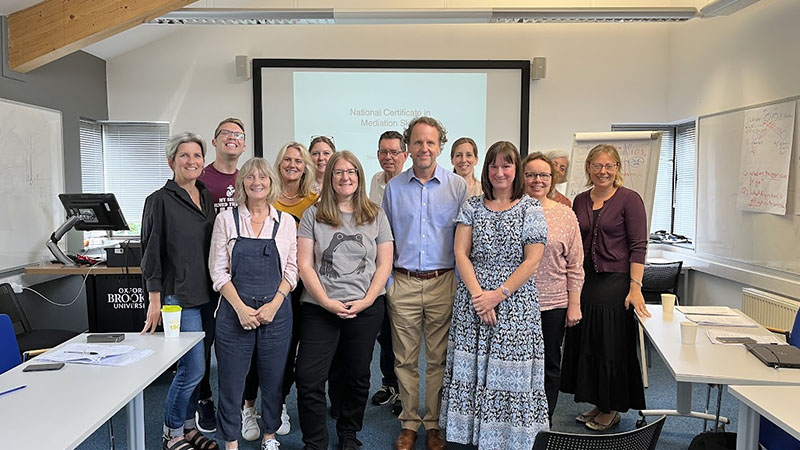
Some of the university's trained mediators.